Title
Mary Kate Cleary
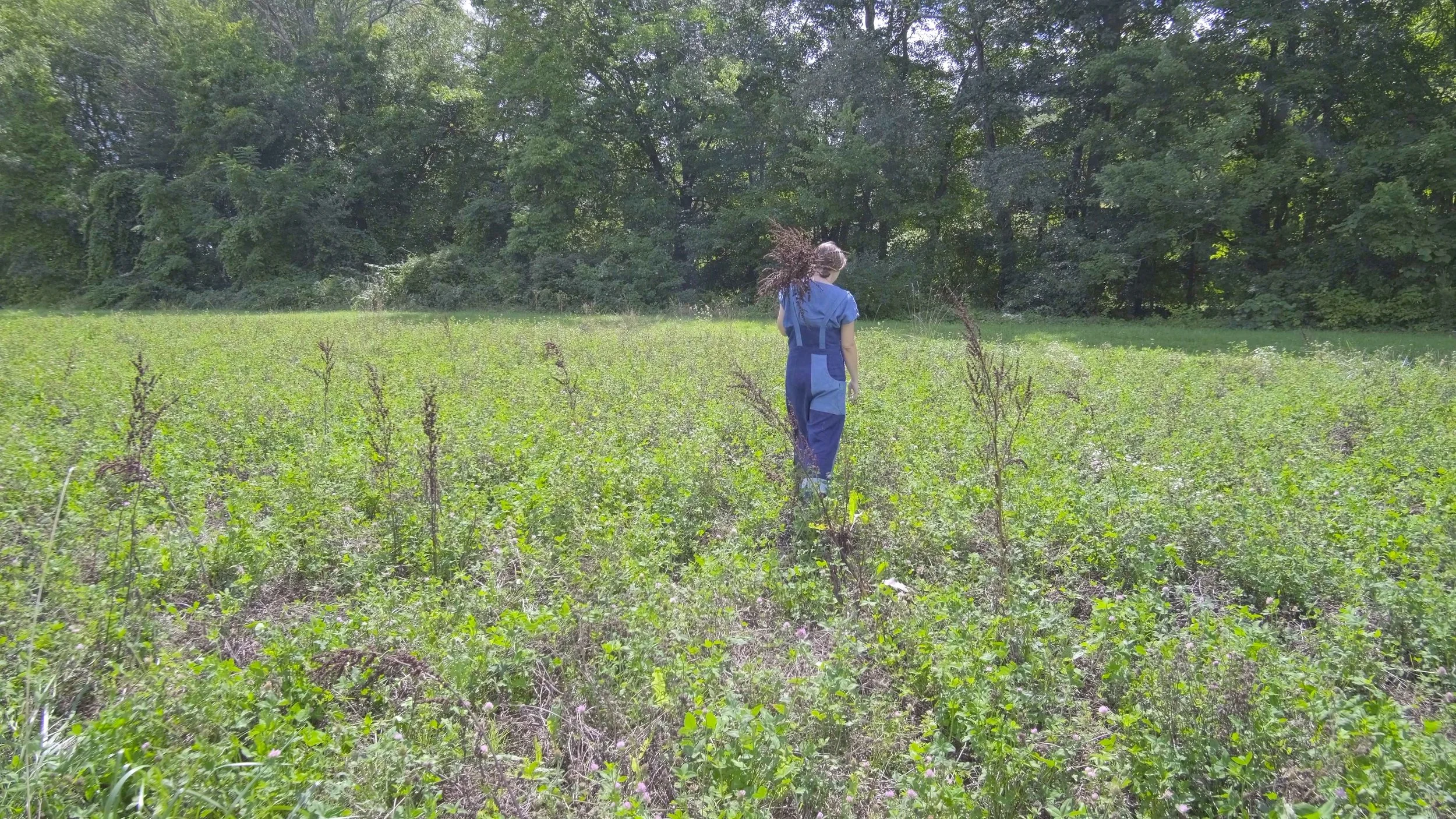
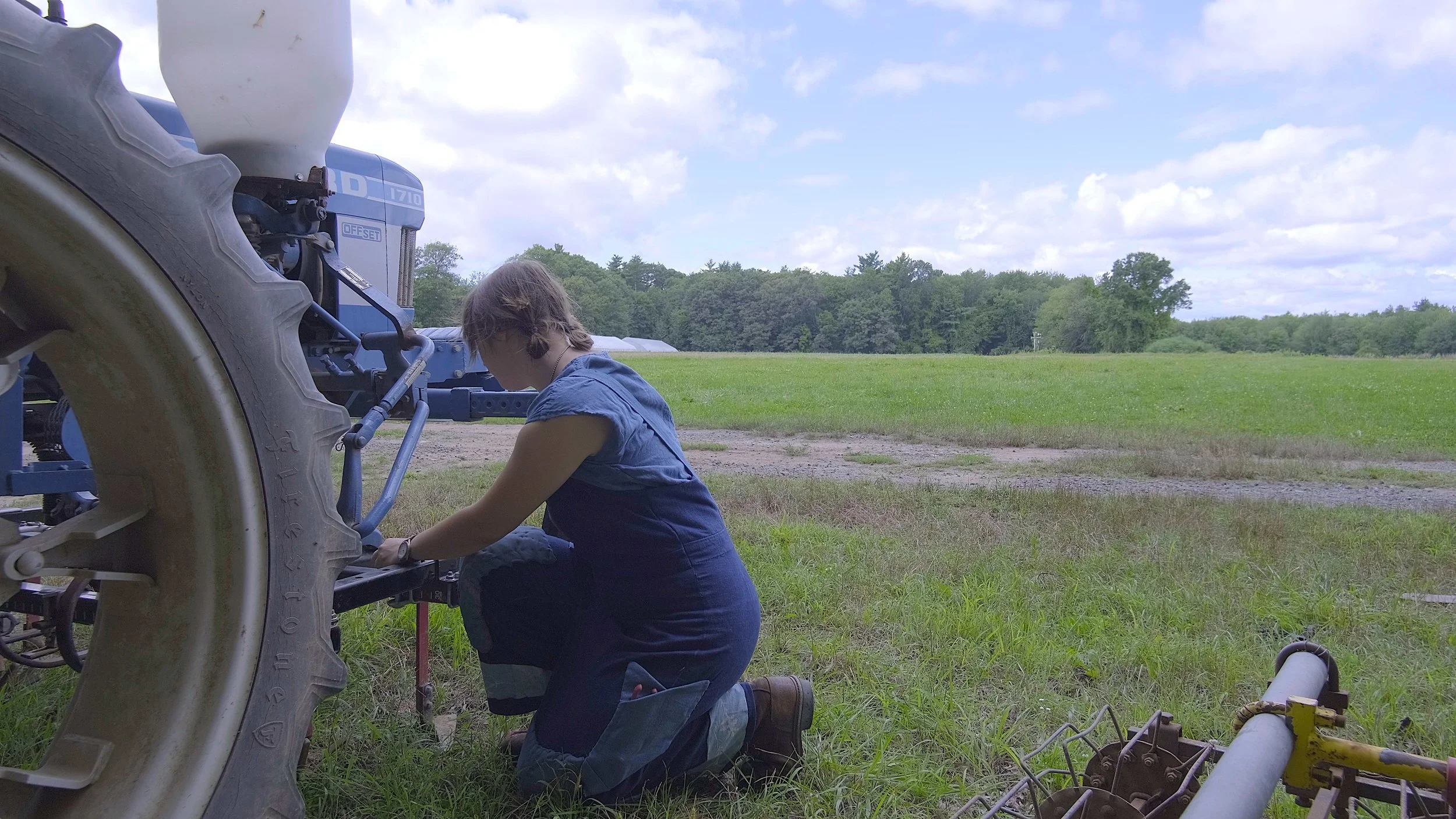
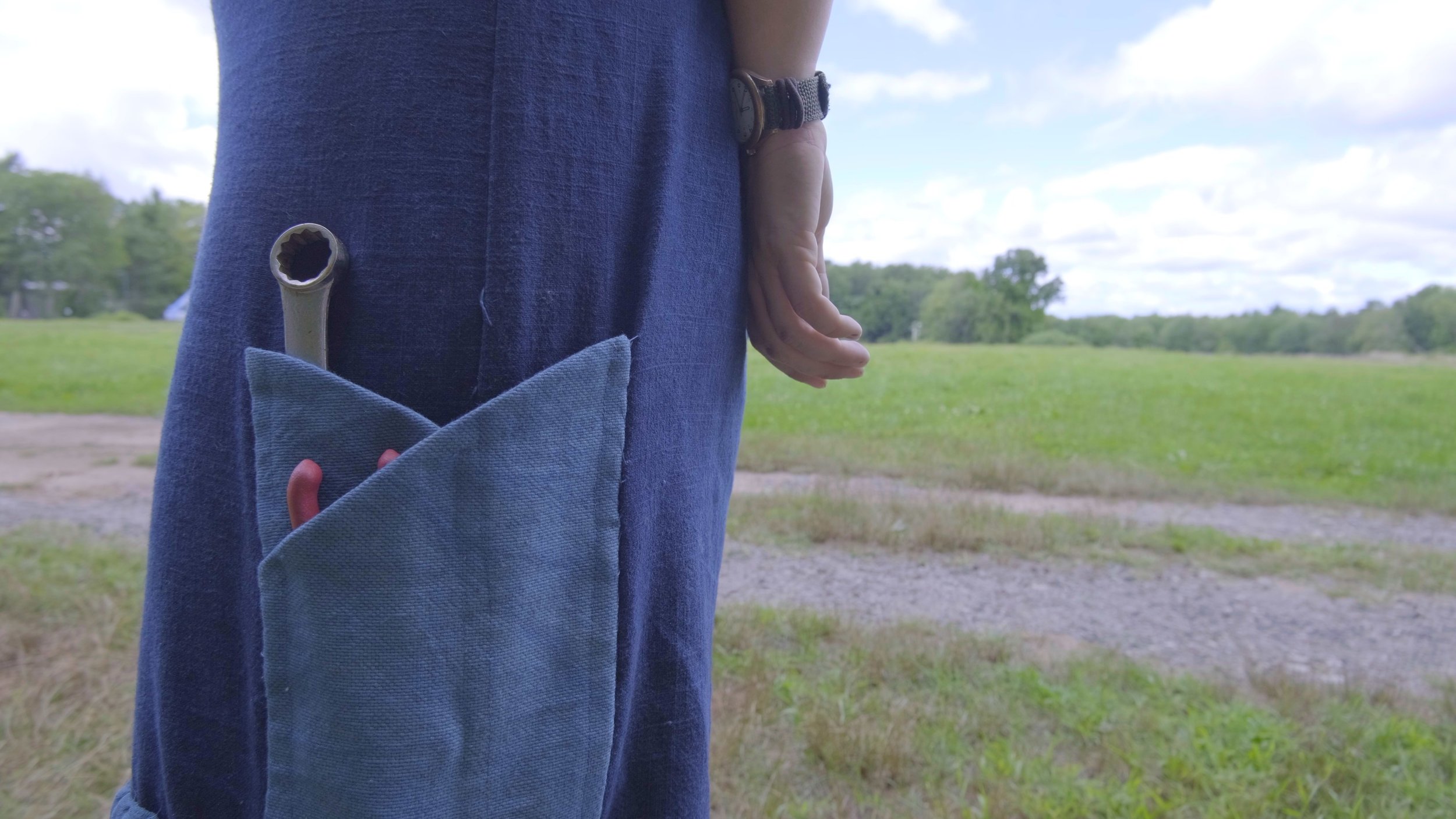
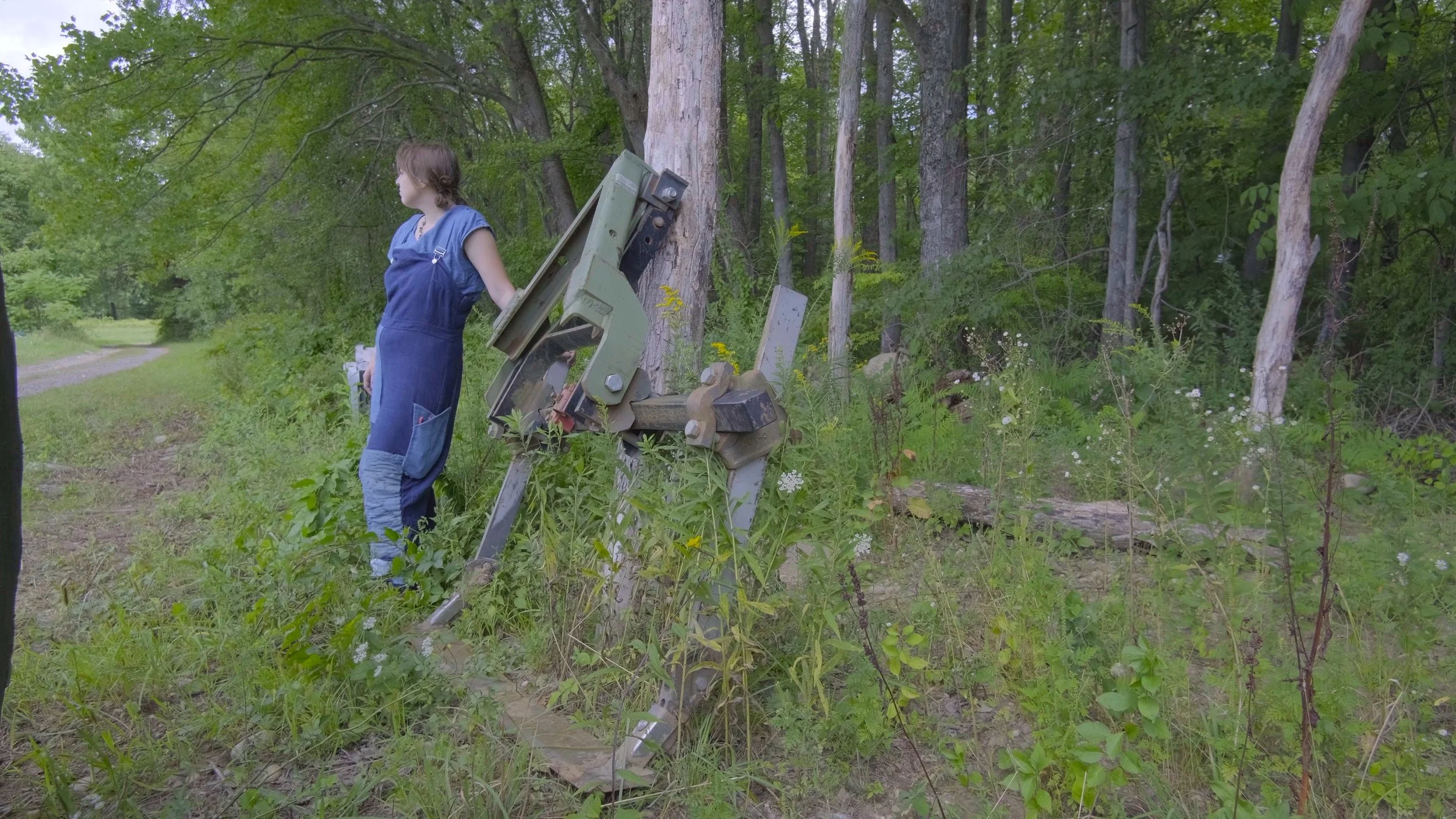
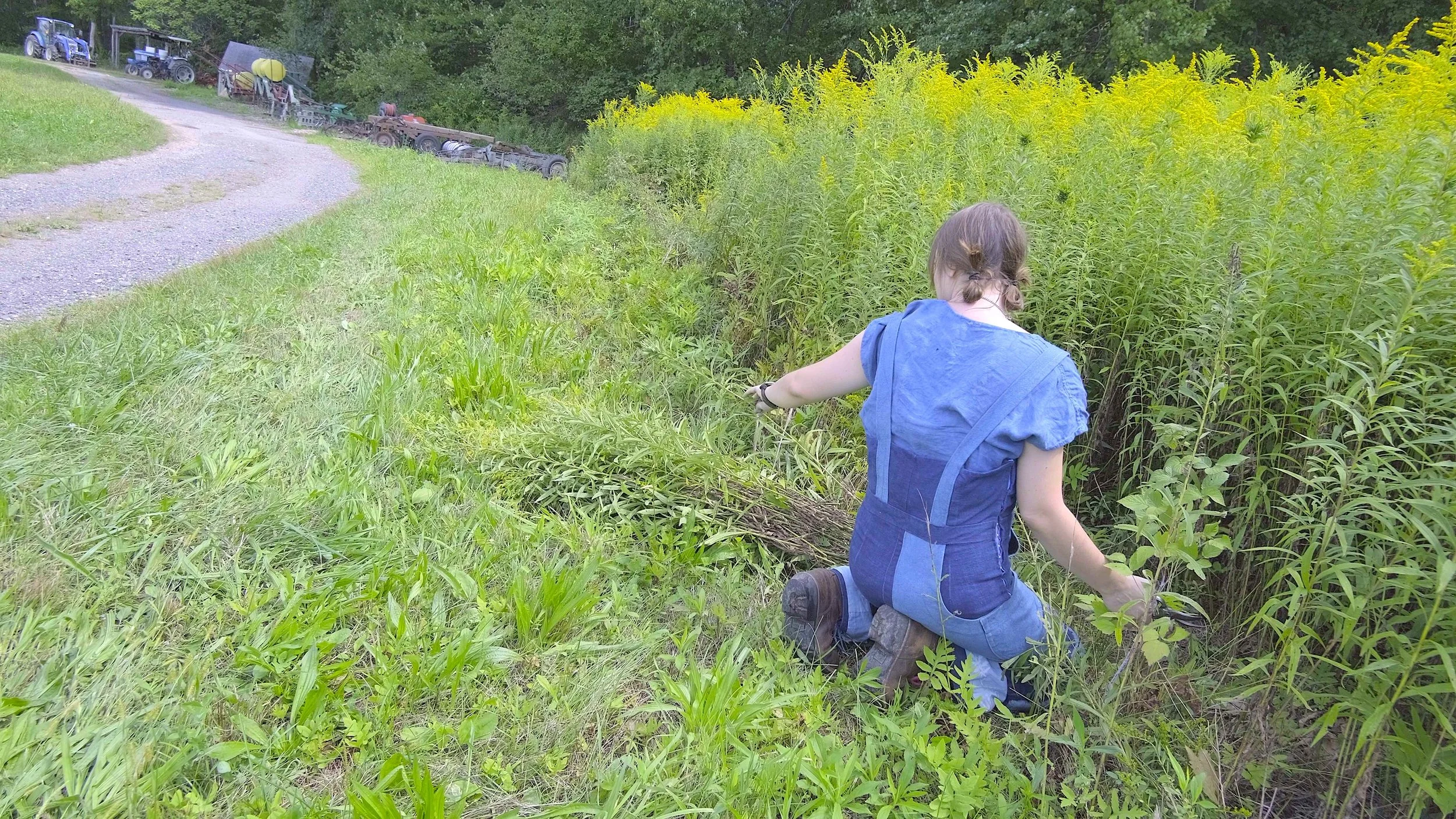
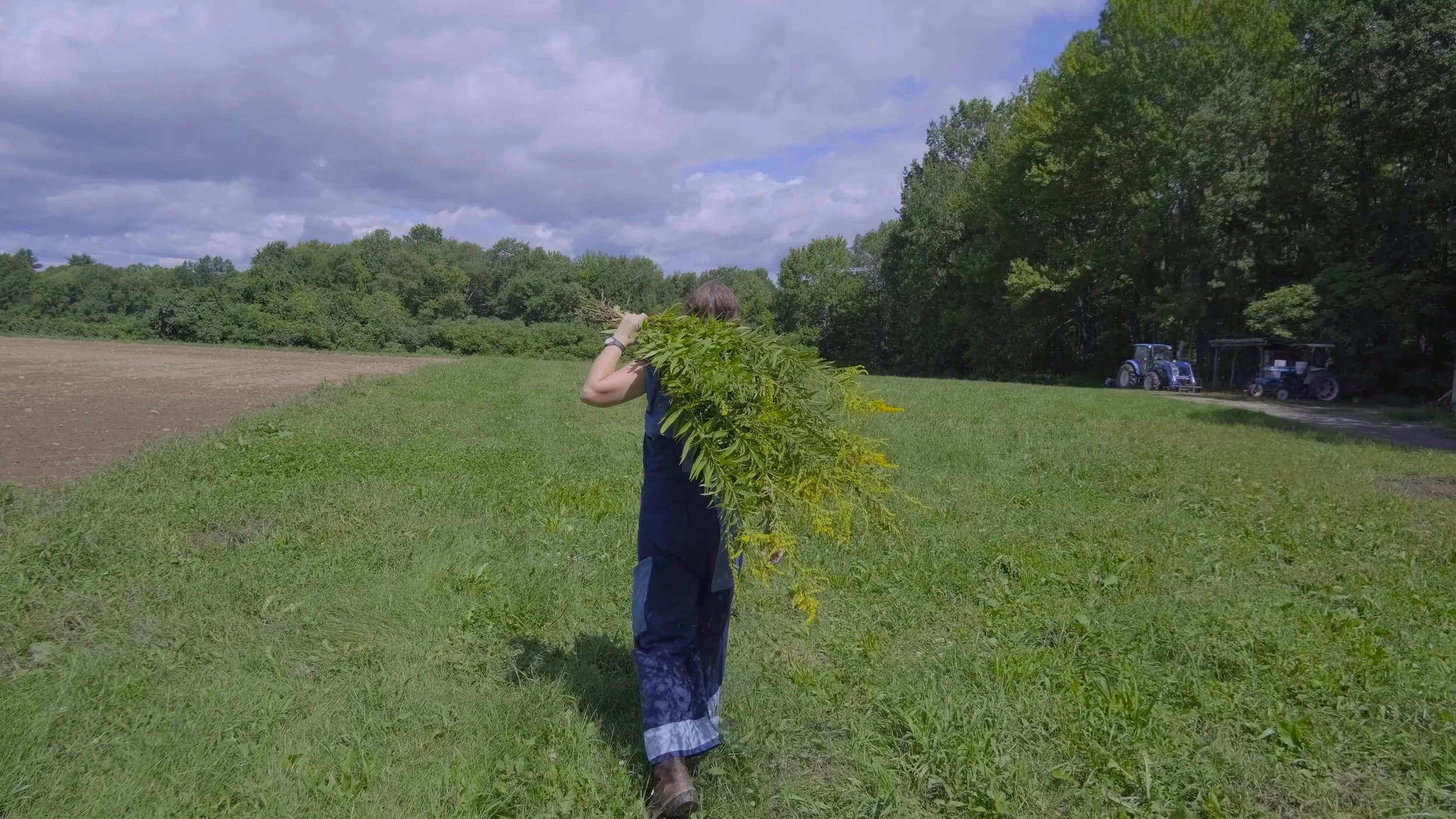
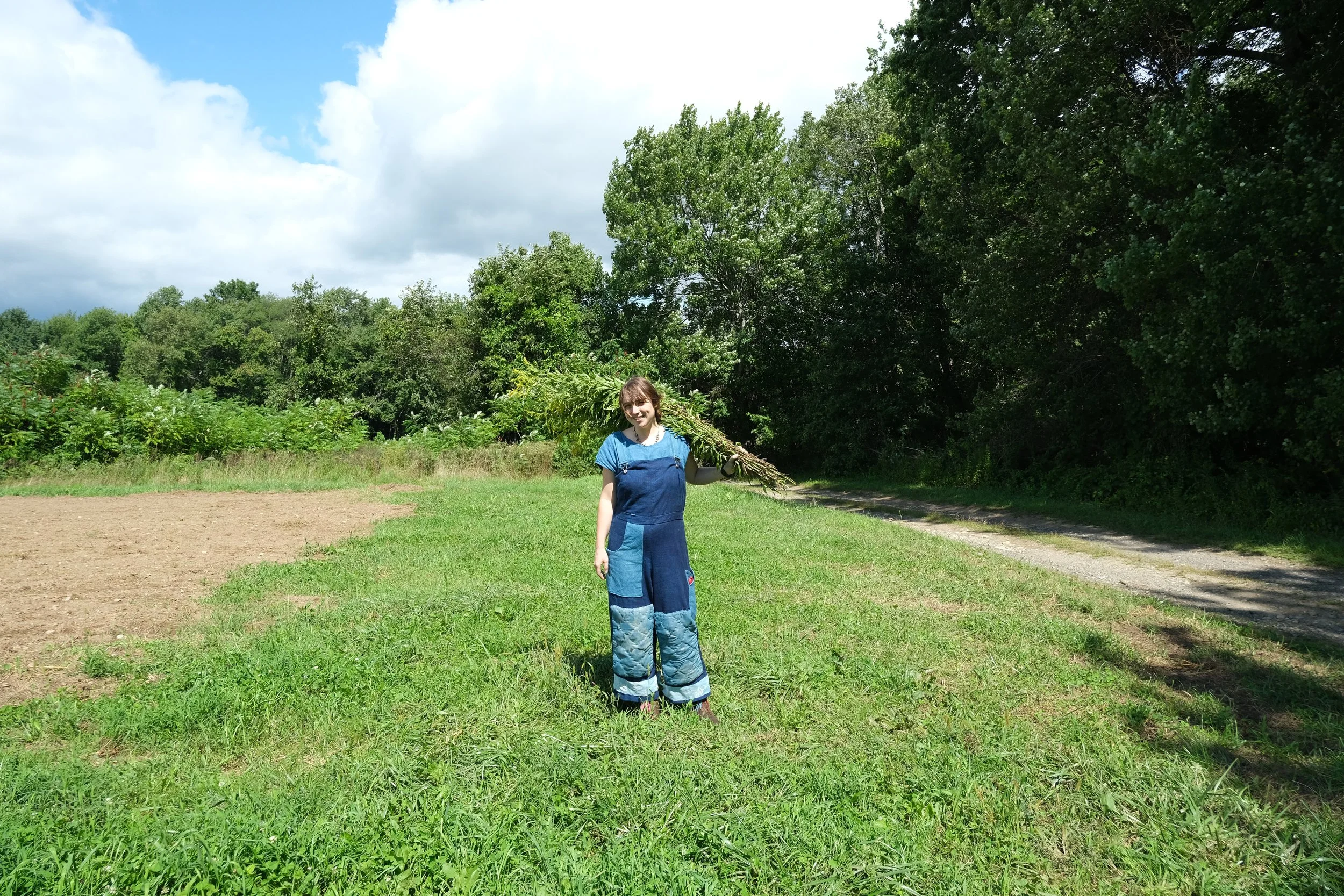
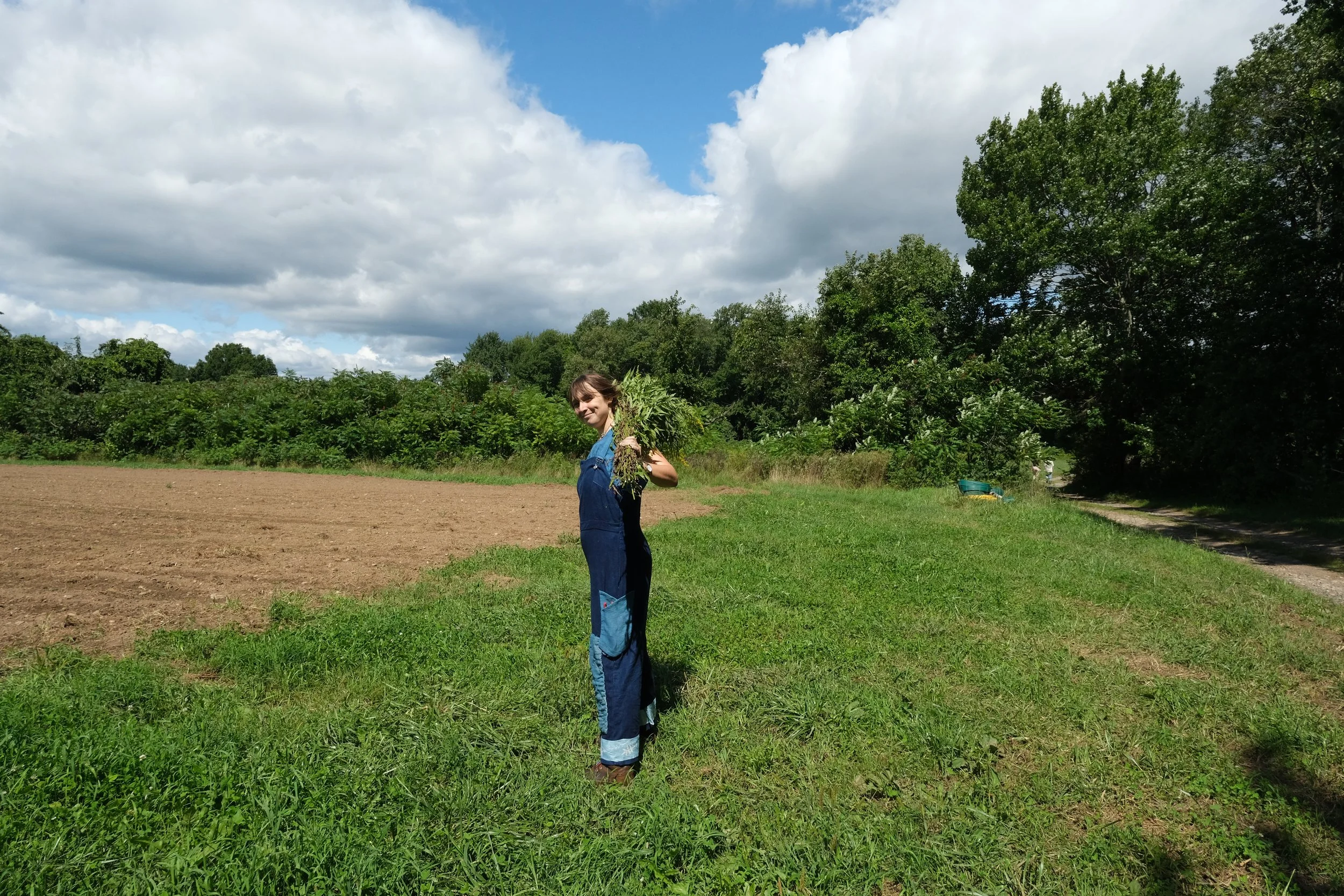
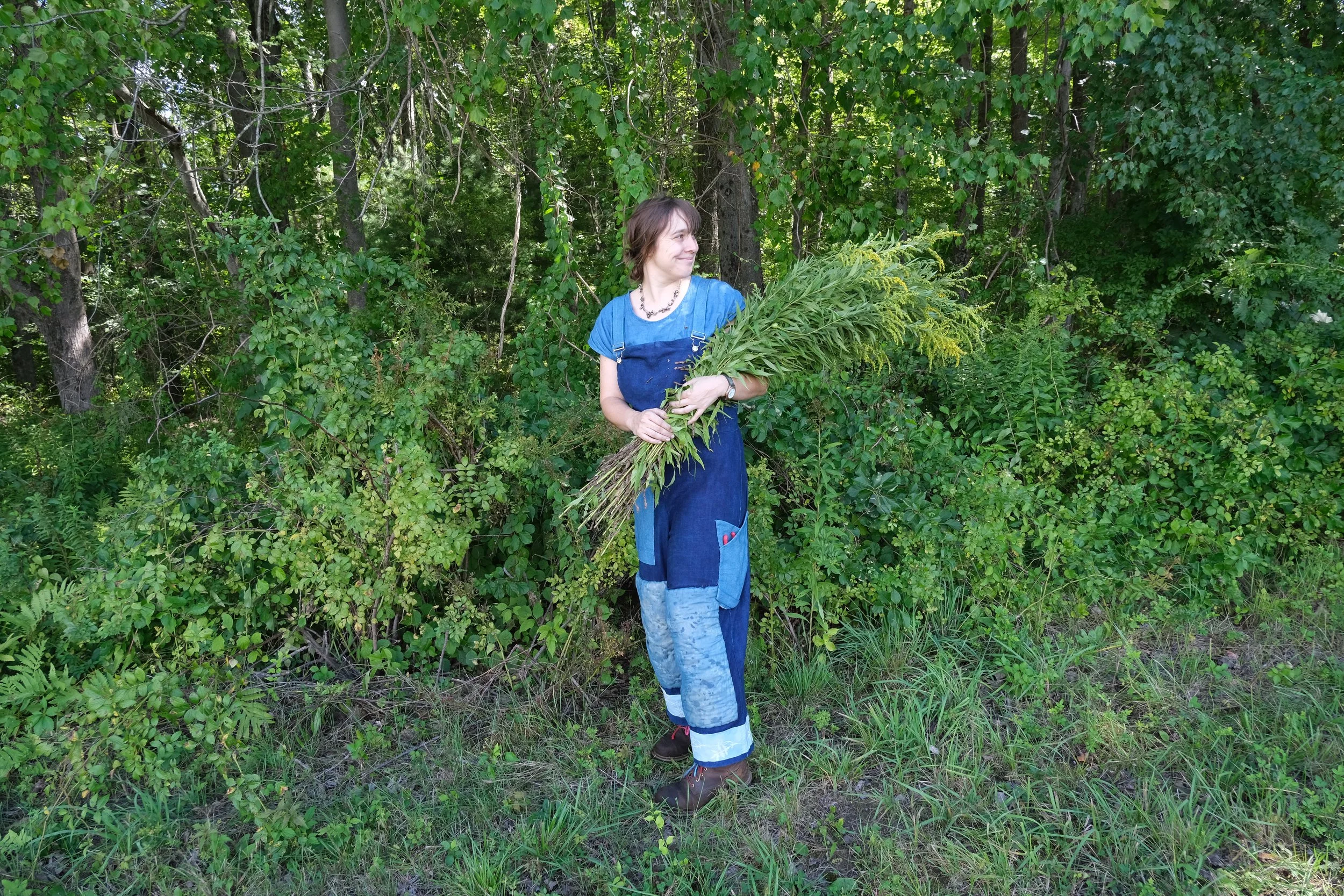
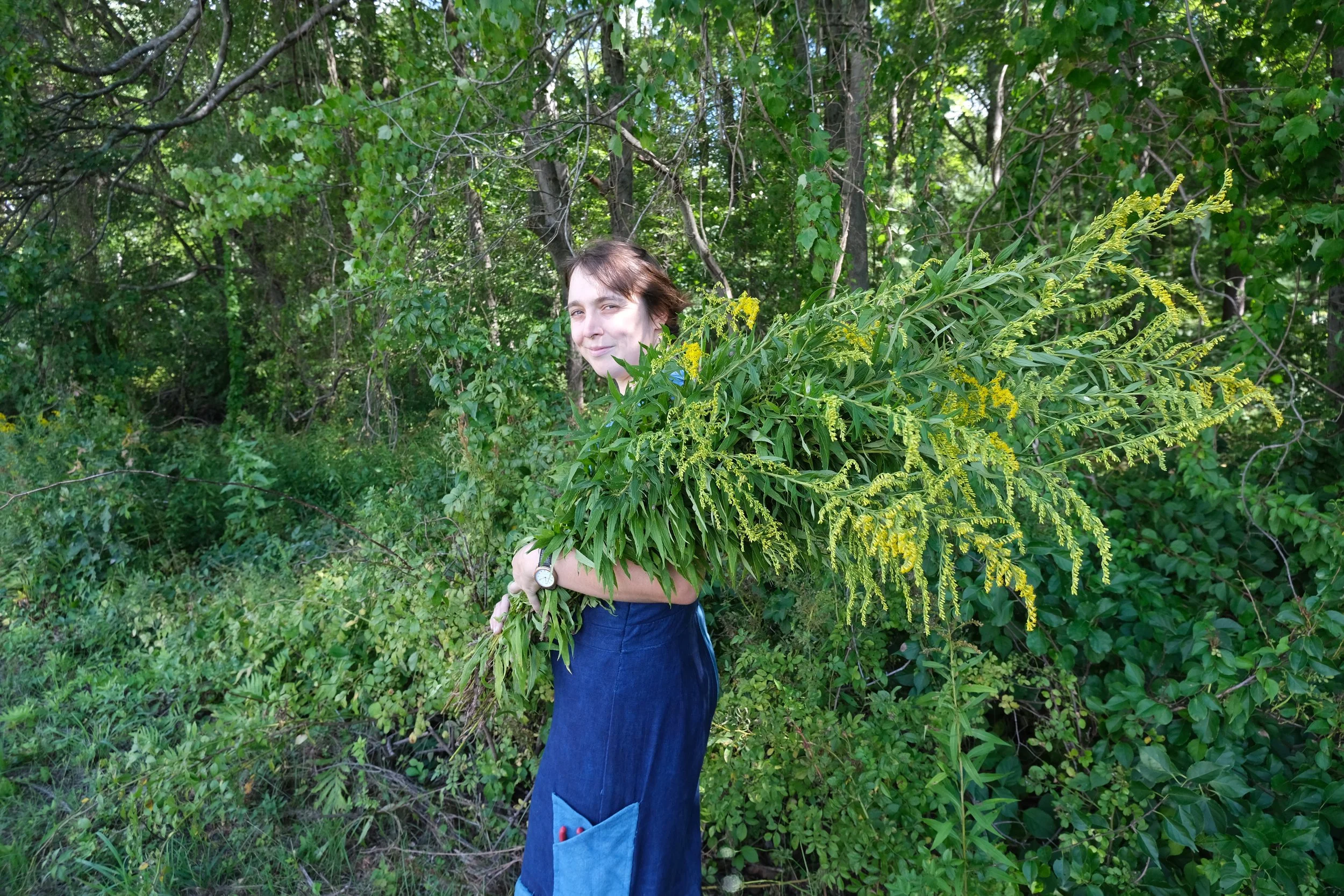
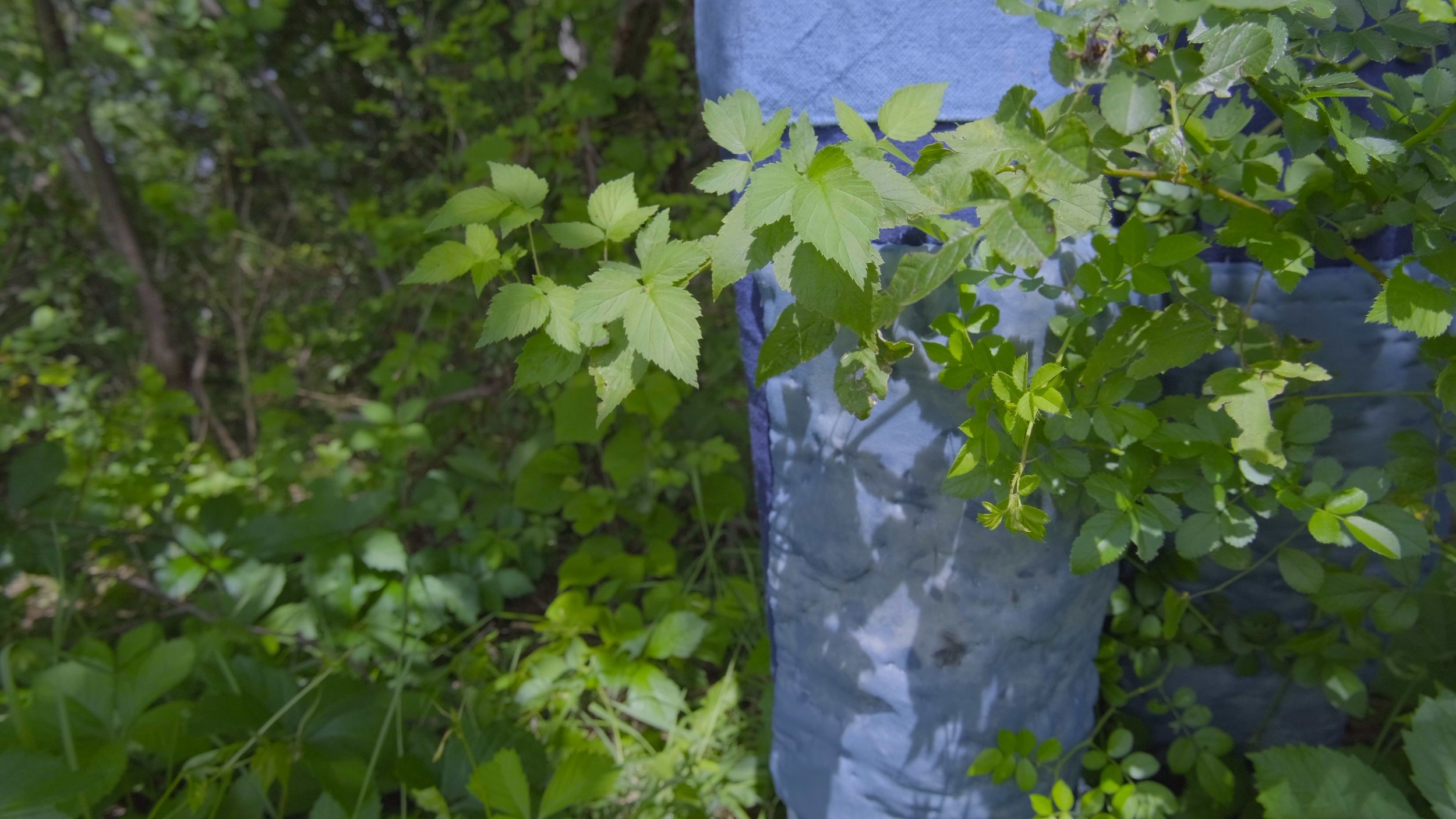
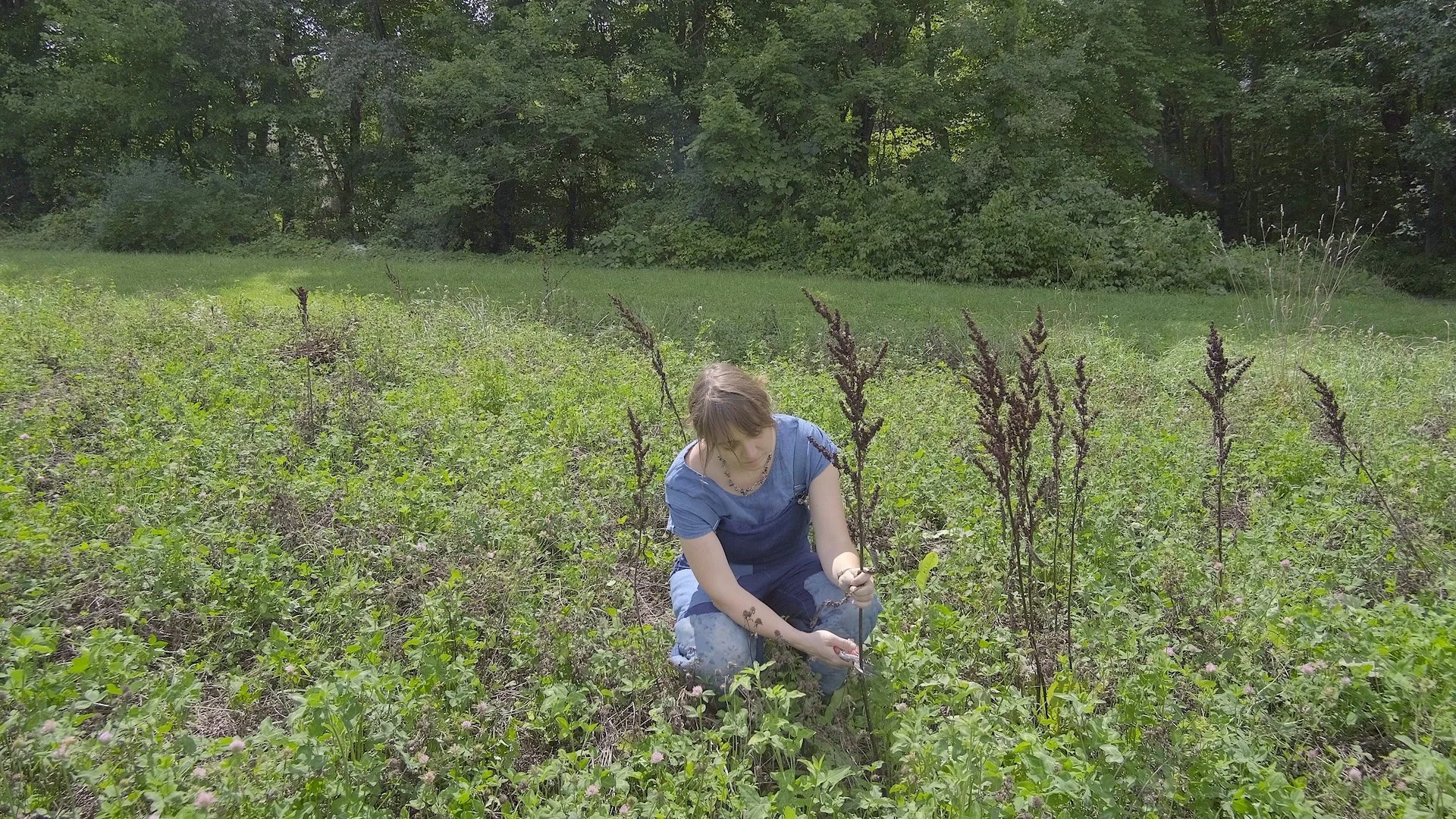
Materials: Silk dyed with fresh leaf artist grown indigo and acid rain, milkweed fluff and seeds, indigo seeds, mugwort seeds, clover seeds recycled wool interfacing, reverse twisted linen thread, cotton underdyed with mugwort, stiffened with artist made soymilk, printed in katazome style with norizome rice paste, then dipped into a fructose reduction indigo vat with artist grown and extracted pigment. Linen dyed in a fructose reduction indigo vat with indigo pigment from India, artist designed workwear pattern, boots artists own, indigo dyed bootlace.
The following is a transcription of an interview with a 2075 climate worker:
“So as it turns out the greatest solution to the kaleidoscopic climate crisis was not something we were waiting to invent, it was the creative power of working people. Once we took care of everybody's needs, it freed them up to imagine how to solve ecological catastrophe.
Most of the solutions are unglamorous. I spend my time making farm equipment and encouraging farmers to grow carbon sequestering ground cover.
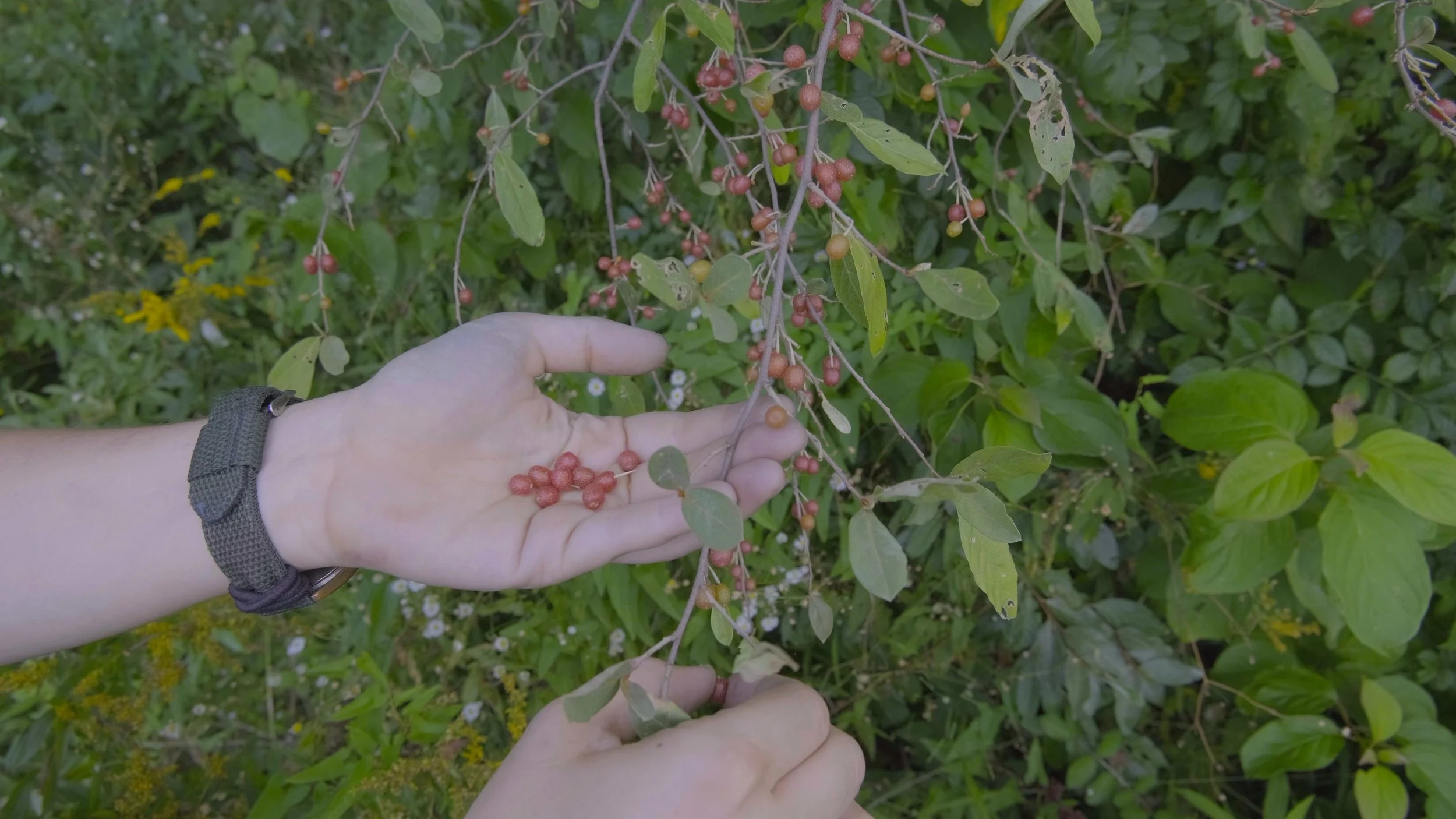
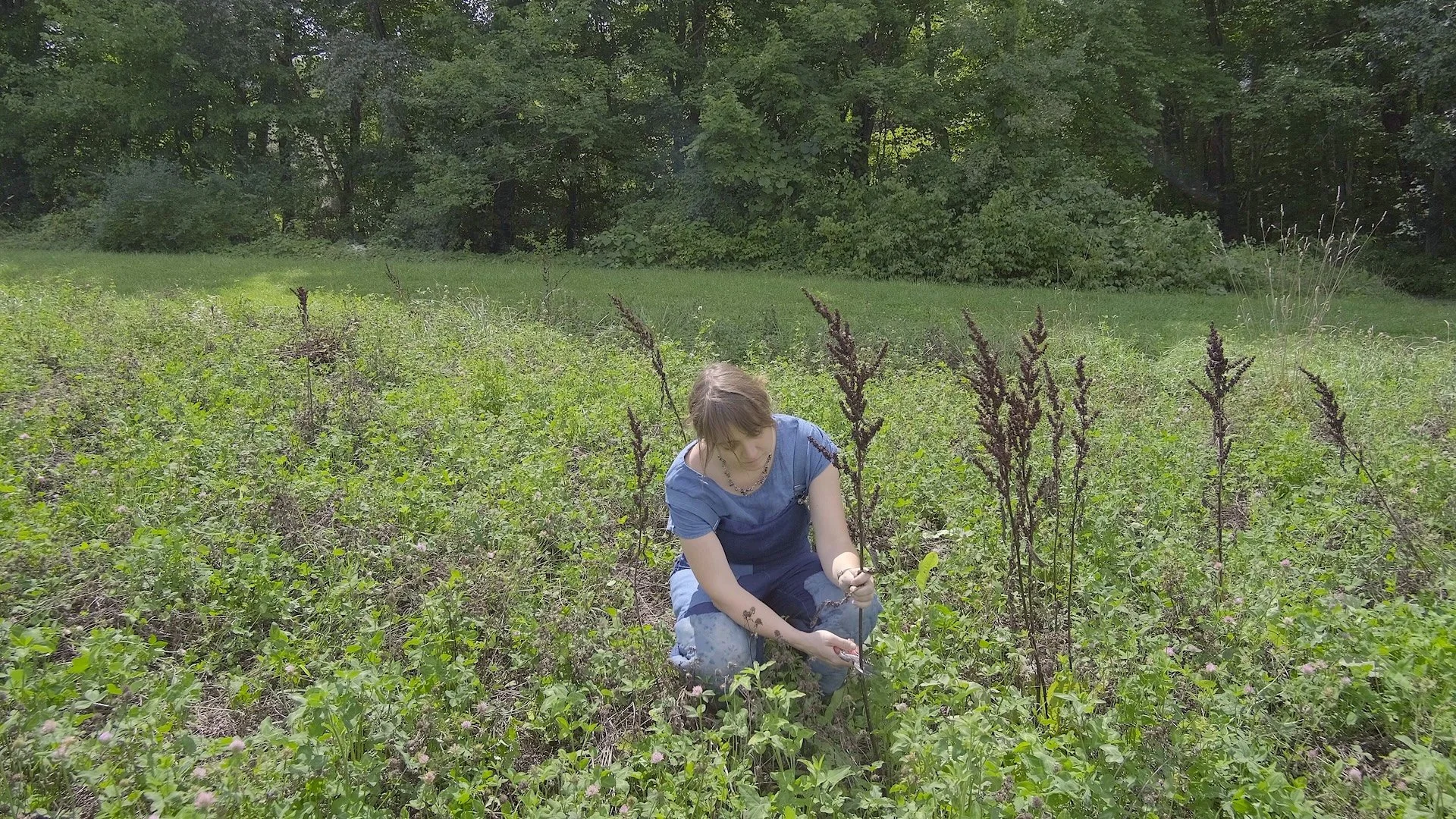
My tractor attachments cut a thin strip in the groundcover and allow farmers to grow vegetables with minimal disturbance to the soil. I started by working with nitrogen fixing Dutch White Clover, but as time passed I began to cross breed it with sweet smelling mugwort and lush indigo plants.
All of my fabrication work only takes a few hours a week. I enjoy examining the spaces around the fields which were filled with disruptive plant species that can crowd out more beneficial ones.
So I sewed up these protective overalls. They are heavily dyed with my mugwort/ clover/ indigo hybrid to protect me from the small flying insects and the bad dreams that haunt these waste spaces. The images on the ribbons that wrap around my ankles are representations of the hybrid plants that I work with.
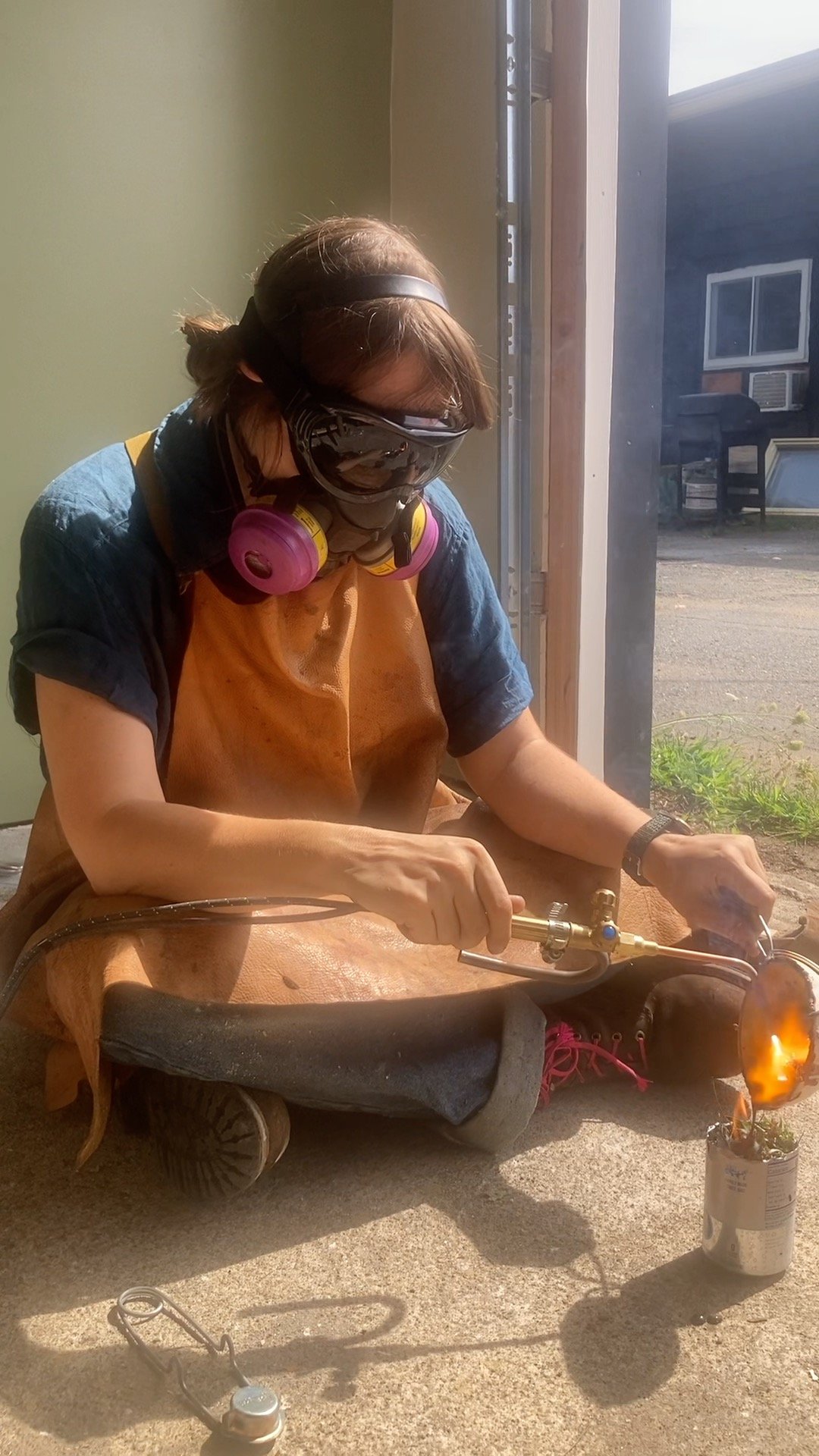
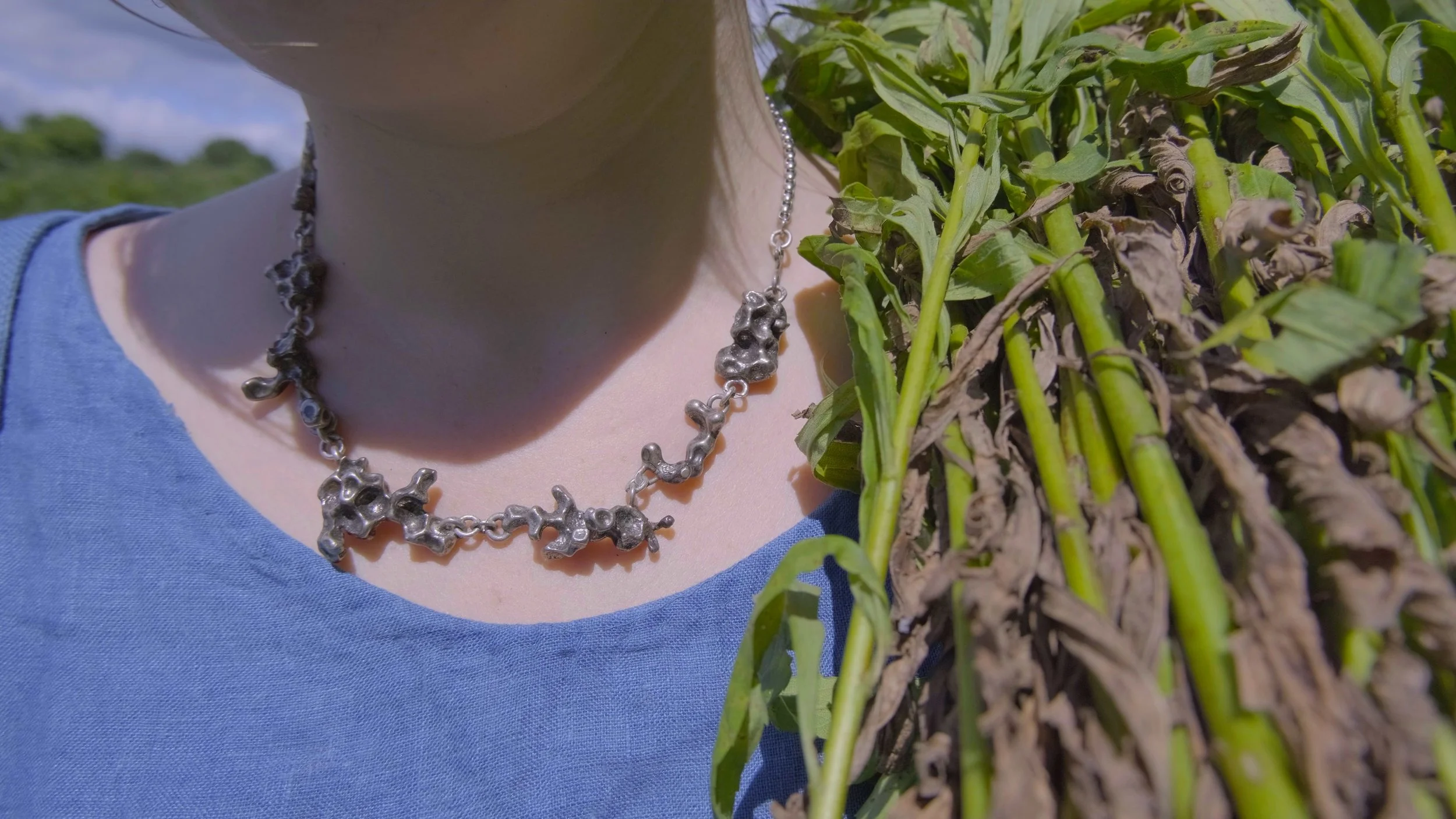
I made knee patches quilted with a thin layer of silk and milkweed mugwort and indigo seeds. As I remove disruptive plants my pants become torn and I spread the seeds of beneficial ones. I gather the seeds of disruptive plants and prevent them from sprouting by pouring molten metal on them. I turn the molten metal into talismans I can keep on my body- to help me remember the weight of the task I am undertaking.”
“Her mother had remembered the names of the plants by what they did, boot black, fever, toothache. The cures for problems they had faced in colonialism grew wild and pointless to anyone but the displaced. What could bloom here, and what would they call it? Is there a plant that can hold the total loss? Scream tree? Waling grass? Moaning root? She had to ask that question to deny the reason for it. What does a healer do after the last plant has abandoned? She pushed her fingers into the dust for now.”
-Alexis Pauline Gumbs, M Archive: After the End of the World
Further reading
Deerfield Embroidery: Traditional Patterns form Colonial Massachusetts, Margery Burnam Howe
Art and Labor: Ruskin, Morris, and the Craftsman Ideal in America, Eileen Boris
The Relations of Art to Labour, William Morris
Red White and Black Make Blue: Indigo in the Fabric of Colonial South Carolina Life, Andrea Feeser
Ireland’s Wild Plants: Myths, Legends and Folklore, Niall Mac Coitir
A Century of Tomorrows: How Imagining The Future Shapes The Present, Glenn Adamson
The Mushroom at the End of the World: On The Possibility of Life in Capitalist Ruins, Anna Tsing
Staying With The Trouble: Making Kin in the Chthulucene, Donna Haraway
The Carrier Bag Theory of Fiction, Ursula K. Le Guin
M Archive: After the End of the World, Alexis Pauline Gumbs
Crocosmia, Miranda Mellis
Strip Tilling: https://smallfarms.cornell.edu/resources/strip-tillage/
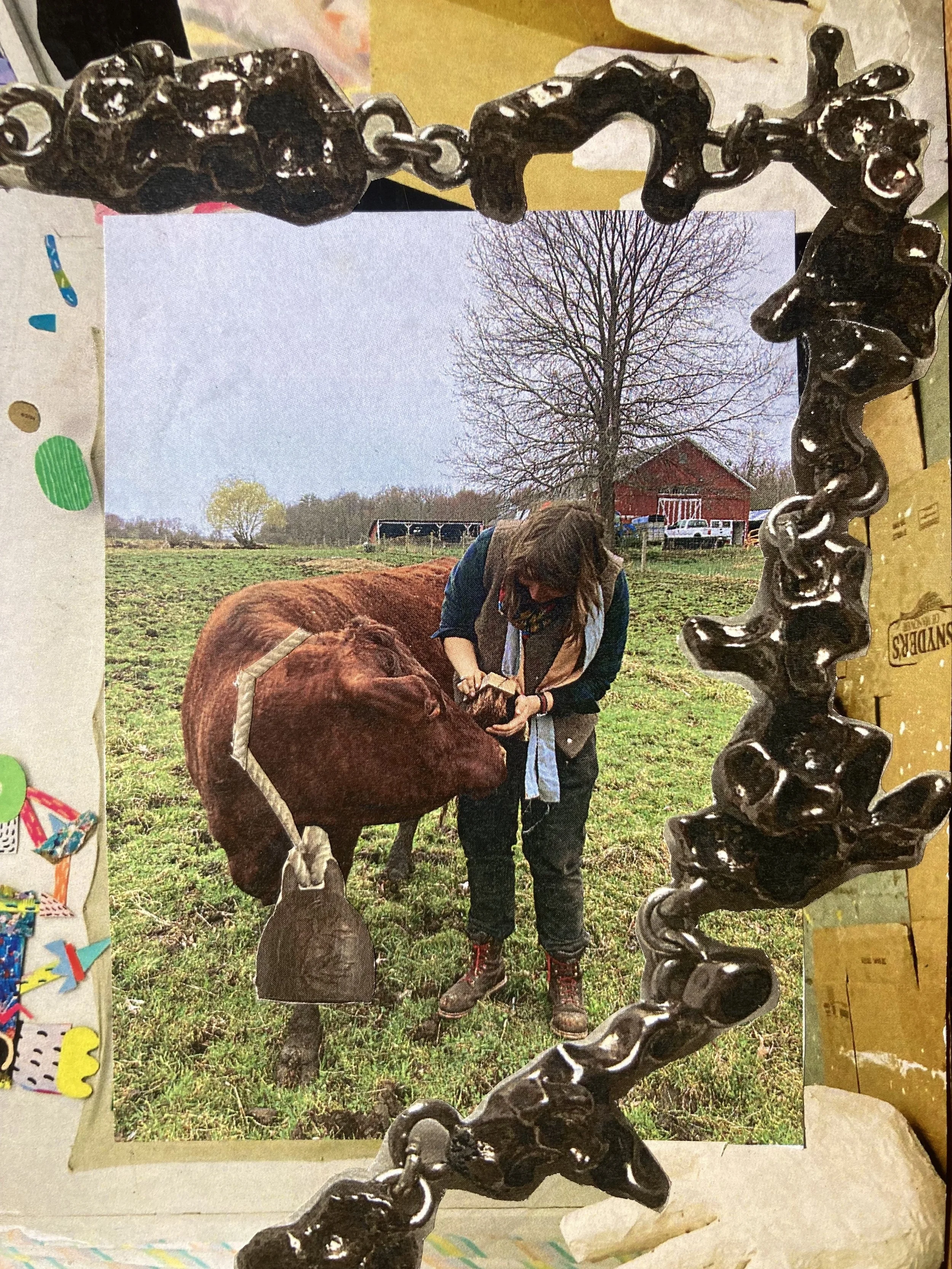
Mary Kate Cleary
Mary Kate Cleary is a femme multimedia artist and metalworker concentrating on both the architectural and body scale. Her work explores the revolutionary opportunity of tools and material culture to shape our lived experience and the land around us.
Her background in agricultural engineering in the Connecticut River Valley heavily influences her artistic practice. Her work is an evidence based extrapolation of current trends and lived experience.
Her work began as purely functional, to be put directly into use by her friends and neighbors in their farm fields, but as climate chaos continued to escalate and through the Climate Storytelling 2075 Cohort her work became increasingly speculative. She now imagines material culture from the near future. Her work is meant to be used, worn, lived in, to inspire a gentle and thoughtful way of moving through the world; it moves between dye garden and kitchen and would not be possible without community collaboration.
She imagines the workwear that will dignify and encourage the people of 2075 to become proud land stewards- elevate the work of tending to the land they live on and the act of removing disruptive plants from toil to vocation. Her aesthetic is heavily inspired by local textile history, particularly the imagined indigo dyed botanicals of the Deerfield Blue and White Needlework Society who lived just down the river from her, as well as global indigo tradition, and herbal livestock protection. She wears that clothing today to feel what the future will feel like, to physically embody the world we are trying to build.