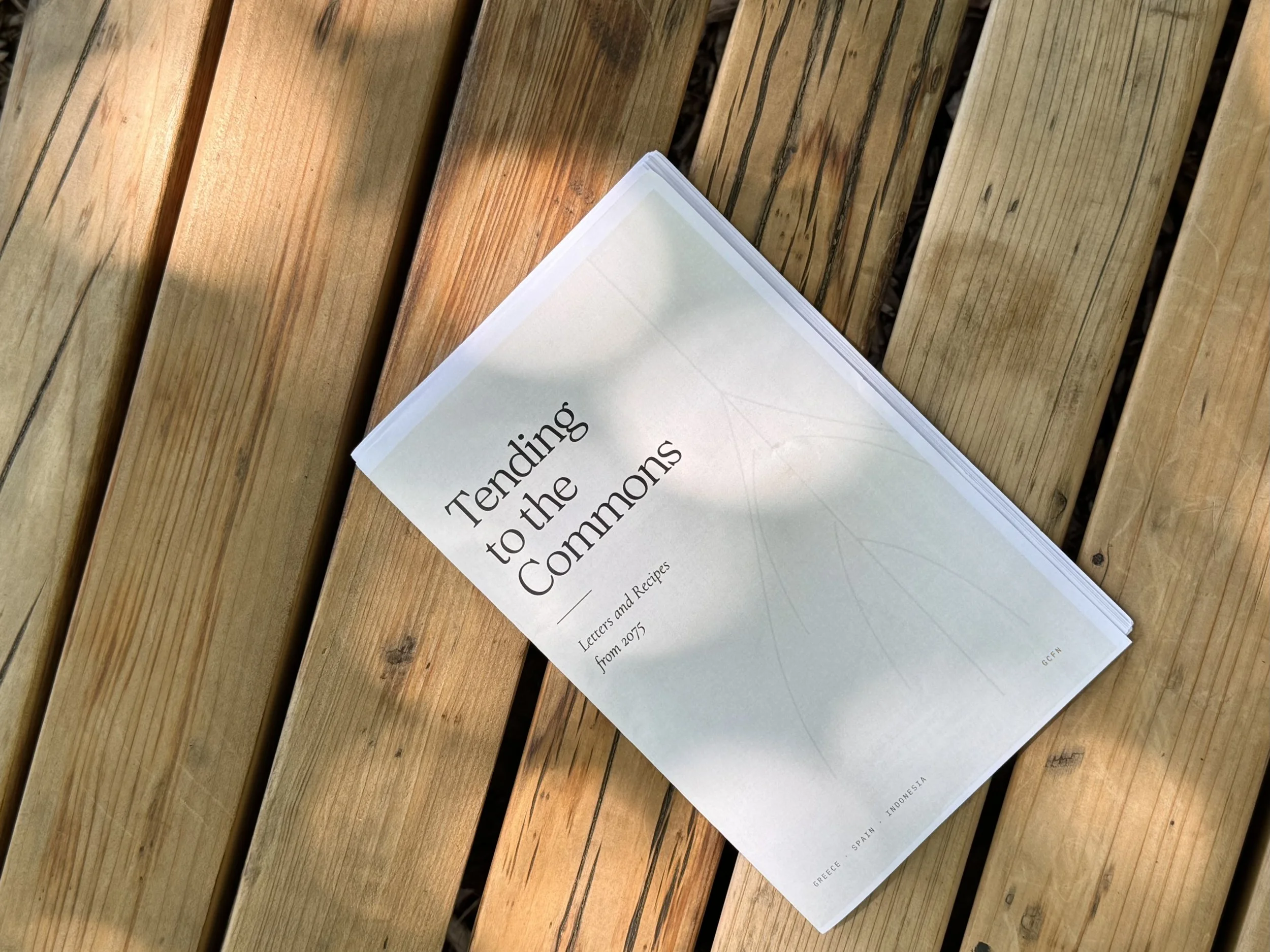
The ecological changes are clear. Near Kalamata, olive trees are struggling through longer droughts and hotter seasons. Around Murcia, oranges grow smaller as water becomes less certain. In the highlands above Pangalengan, tea shifts toward cooler elevations, while along the Indonesian coast, saltwater moves farther inland. Still, the characters cook. They lose familiar ingredients, find substitutions, and share recipes across borders.
Each recipe card includes a small note about what is missing. A variety of tomato that no longer sets fruit in the heat, fresh dill that has become unreliable, the taste of honey from a hillside whose flowering season has changed. These absences are folded into the recipe instructions, pairing grief with adaptation, and practicality with memory.
Tending to the Commons asks what we choose to carry forward when growing food becomes harder. What does it mean to make room for change without forgetting what came before? Instead of presenting climate change through data or disaster, the installation brings it into the kitchen in the form of a swapped ingredient, a saved seed, and a notebook with scrawled notes.
My hope is that visitors leave a little hungry, perhaps a little more tender, and more attentive to the future already arriving. Consider this my invitation to you to pull up a chair.
Tending to the Commons
Letters and Recipes from 2075
Isabela Valencia
Tending to the Commons is a speculative fiction project consisting of letters and recipes set in the year 2075. The work follows six farmers and their families across Greece, Spain, and Indonesia who are connected through a global farmers’ network. They write to one another as the land that sustains them changes.
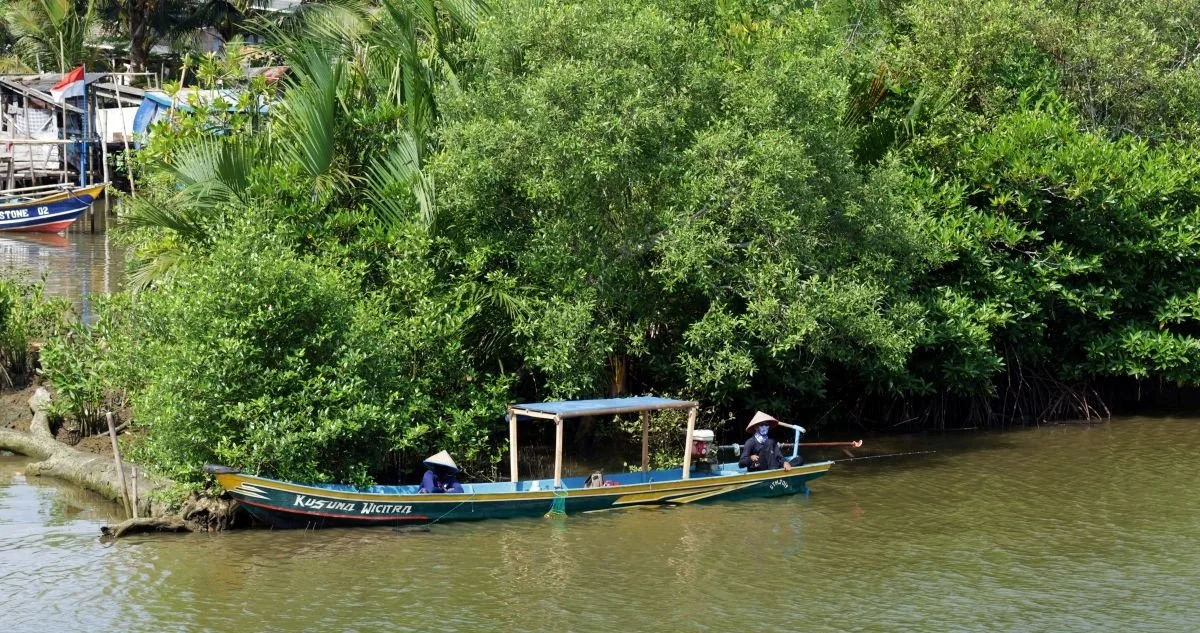
Image via Trees4Trees
Today’s solution, Isabela’s future:
I feature community-managed silvofishery in the milkfish stew recipe, inspired by work in Kampung Laut, Indonesia. Silvofishery combines fish farming with mangrove protection and restoration in brackish-water ponds. This approach involves communities farming fish while keeping or replanting mangroves around and within the pond landscape. The mangroves can help protect the coast from erosion, provide habitat for young fish, and make coastal areas more resilient as tides rise.
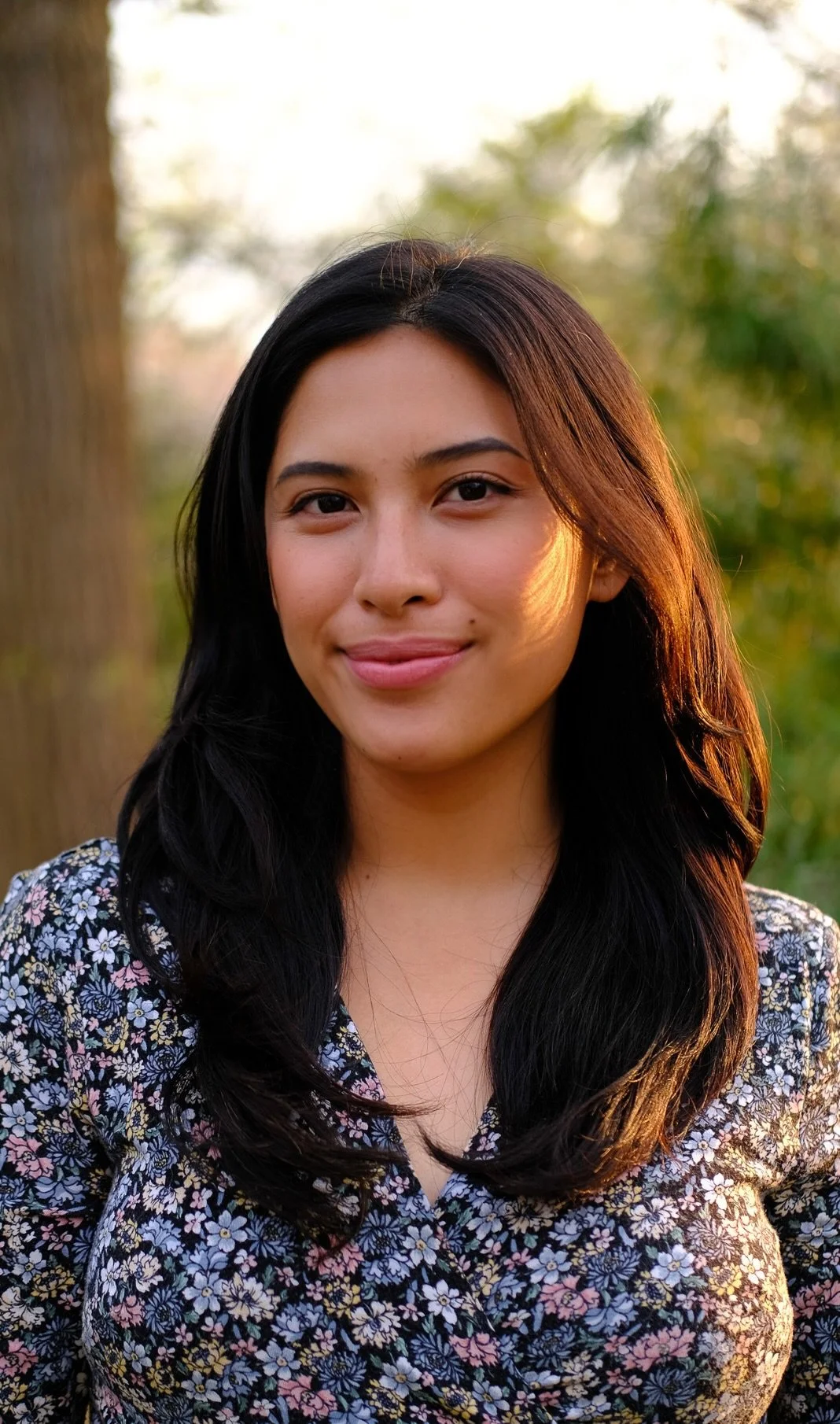
Isabela Valencia
27, Washington D.C.
My earliest memory of caring about environmental issues is connected to food. As a kindergartner, I was unusually preoccupied with the food left over from school lunches: I would think about what was wasted, who had enough, and how so much could be thrown away. One could say that from a young age, food has shaped how I approach environmental questions—in both my personal and professional life. Food is intimate because it is ordinary. Yes, it is something we need every day, but it is also a vessel for memory, culture, labor, family, land, and care. As the climate shifts, so too will the ingredients, seasons, landscapes, and relationships that shape our meals. What I find fascinating in all of this is that food offers a way to approach climate change at a human, not-so-distant scale. We feel it in a missing flavor, a shorter harvest, and a meal made differently than it once was.
Tending to the Commons is a speculative fiction project set in 2075, inspired by a yearlong independent research project I led on how climate change is reshaping farming and food systems. While the project's farmers and stories are fictional, they are informed by my experiences speaking with and working alongside farmers across Europe, Latin America, and Asia. The project follows farmers across Greece, Spain, and Indonesia whose lives are shaped by drought, extreme heat, shifting growing zones, and saltwater moving into the land. They lose crops, trade advice, adapt recipes, and grieve. Still, they cook. The work features loss and disaster but also appetite and the impulse to feed one another. I hope the installation encourages for visitors to recognize that, yes, grief is part of climate change, but so too are resourcefulness, mutual aid, and tenderness.
Isabela Valencia is an environmental writer and researcher based in Washington, D.C.