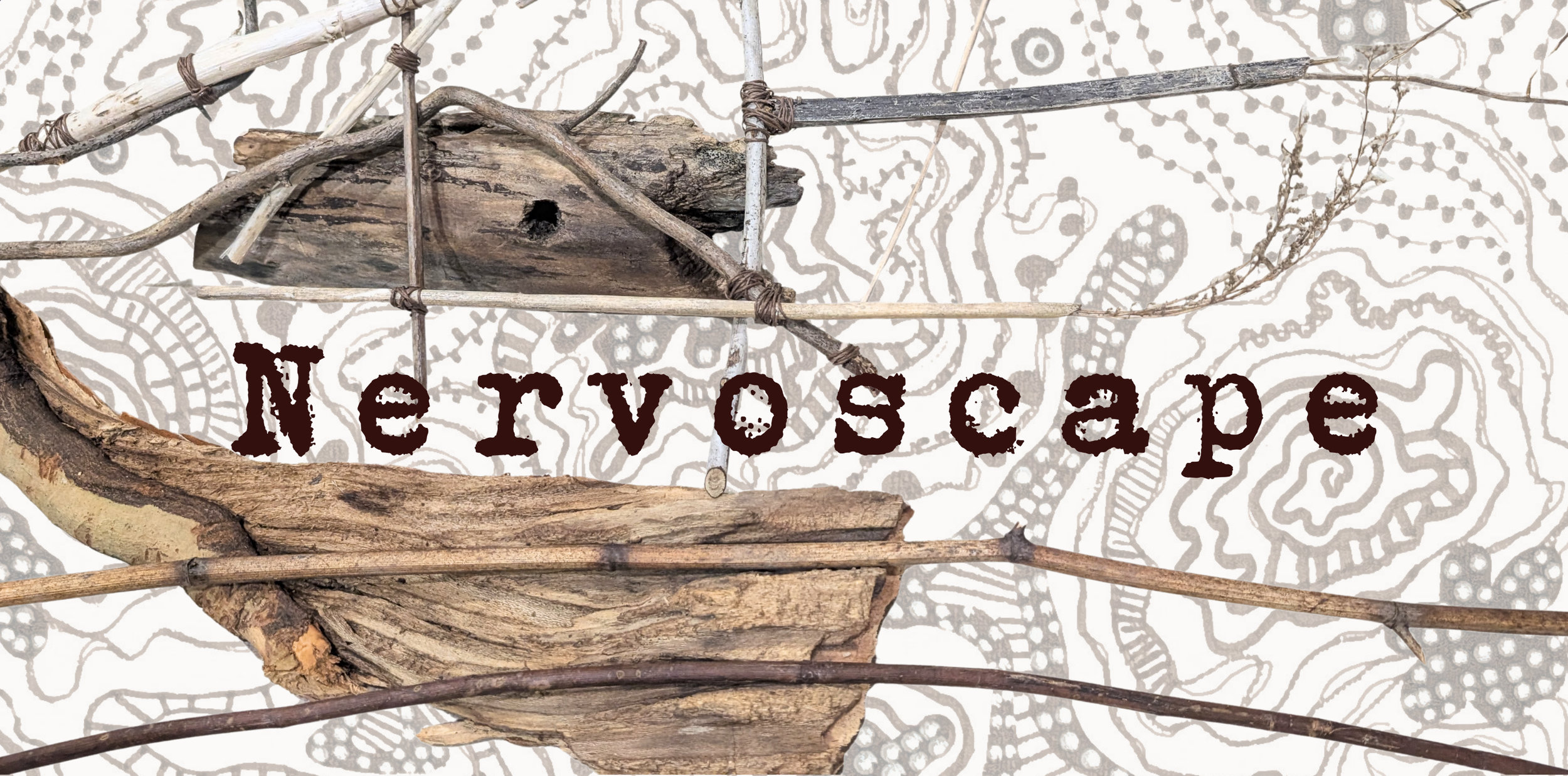
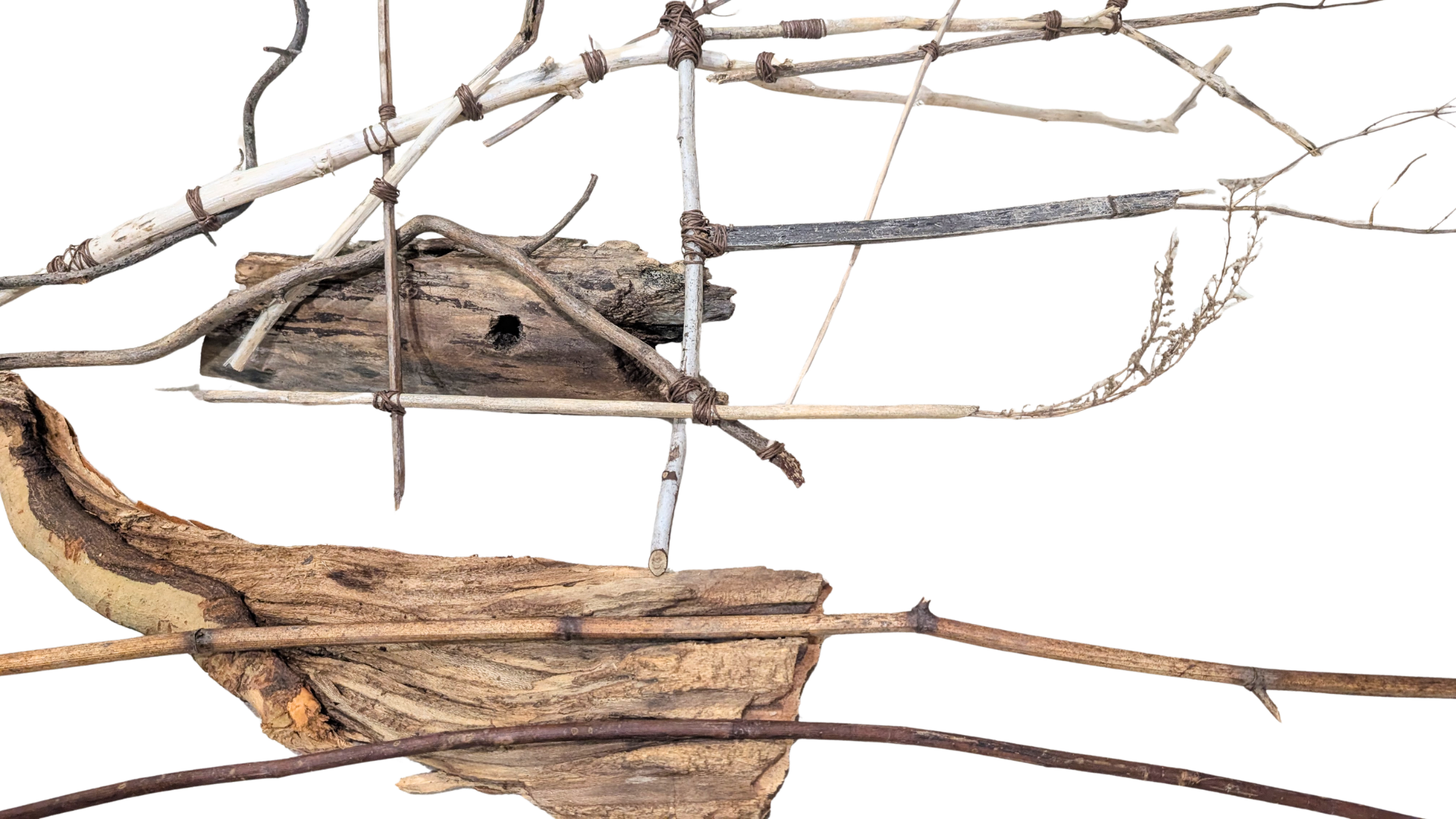
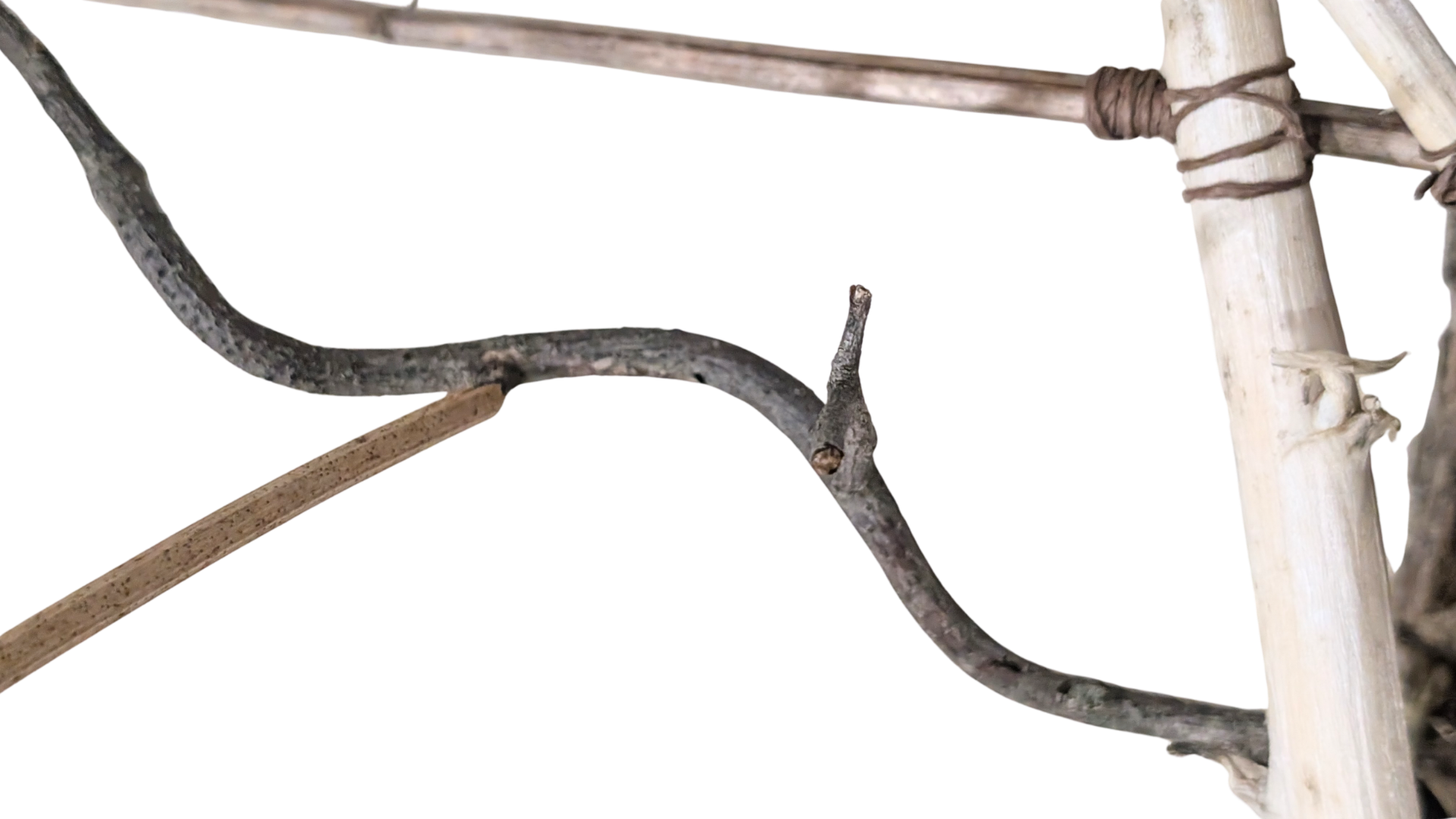
Found object sculpture installation
Jasmine Singh
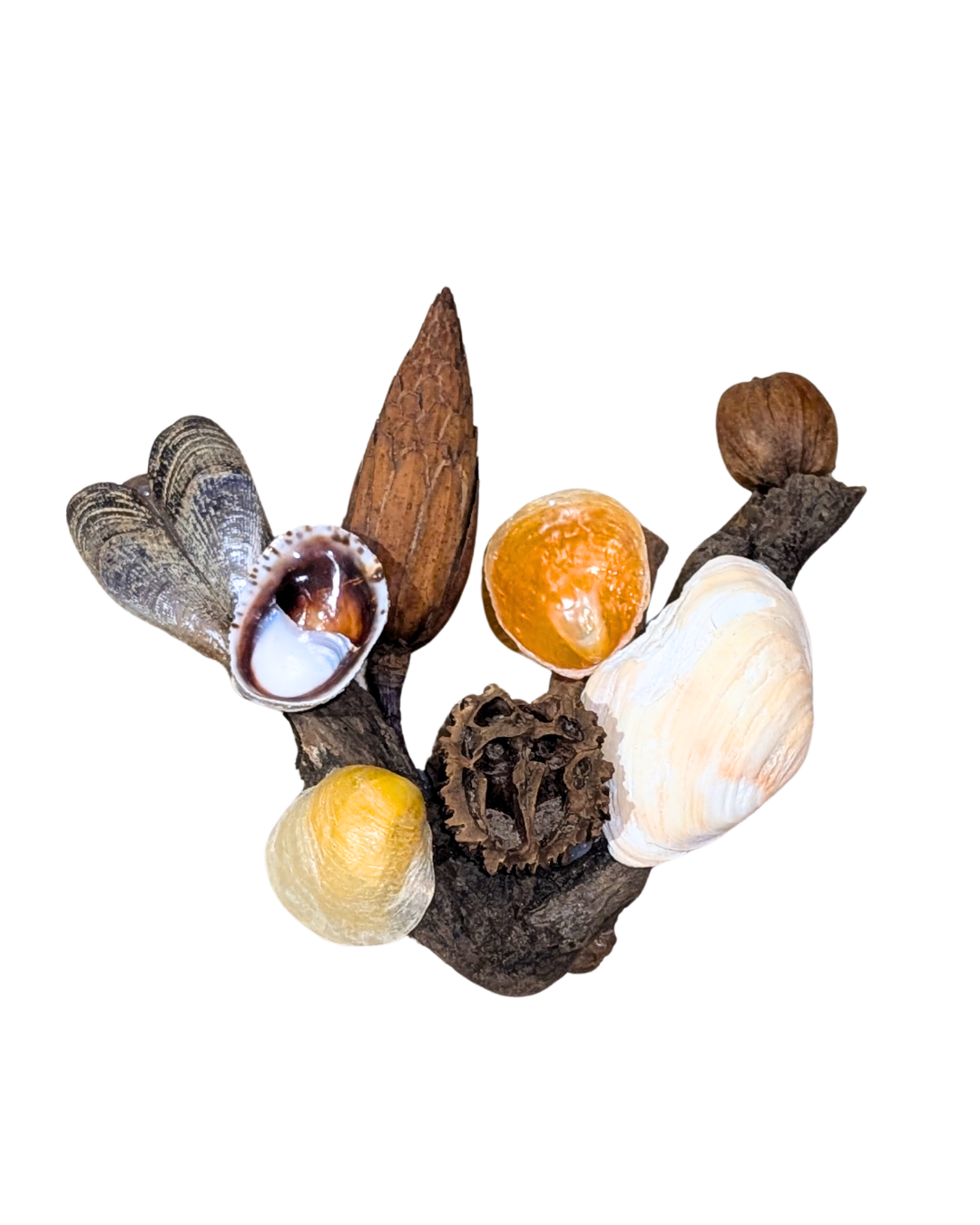
Regulation is not synonymous with calm. It is not about becoming emotionally flat or eliminating discomfort. It is about becoming more malleable — expanding our capacity to move through different emotional states without needing to escape them.
Our society has turned healing into a commodity, making us believe it can be achieved through consumption. Capitalism feeds off dysregulation, rewarding self-sacrifice and self-erasure. Our attention is currency in this world of pseudo-healing.
I realized what I was being told was not working for me. I could not regulate myself in a dysregulated environment, so I stopped burning at both ends and decided to come home to myself.
Nervoscape is me reclaiming this narrative for myself and for everyone exhausted by over-consumption, over-productivity, and over-everything. Our dysregulation mirrors the exhaustion of our planet, but we can choose differently.
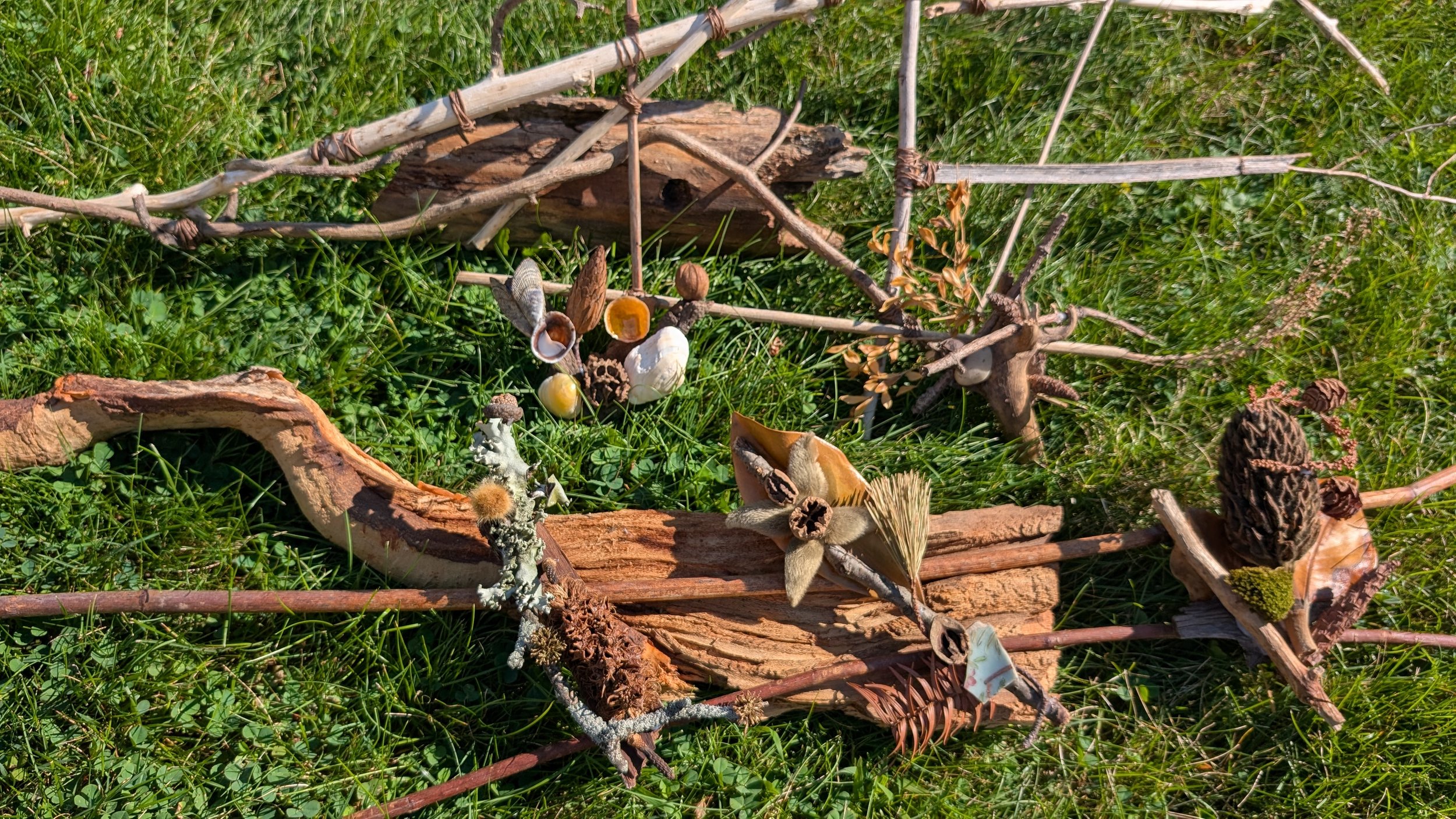
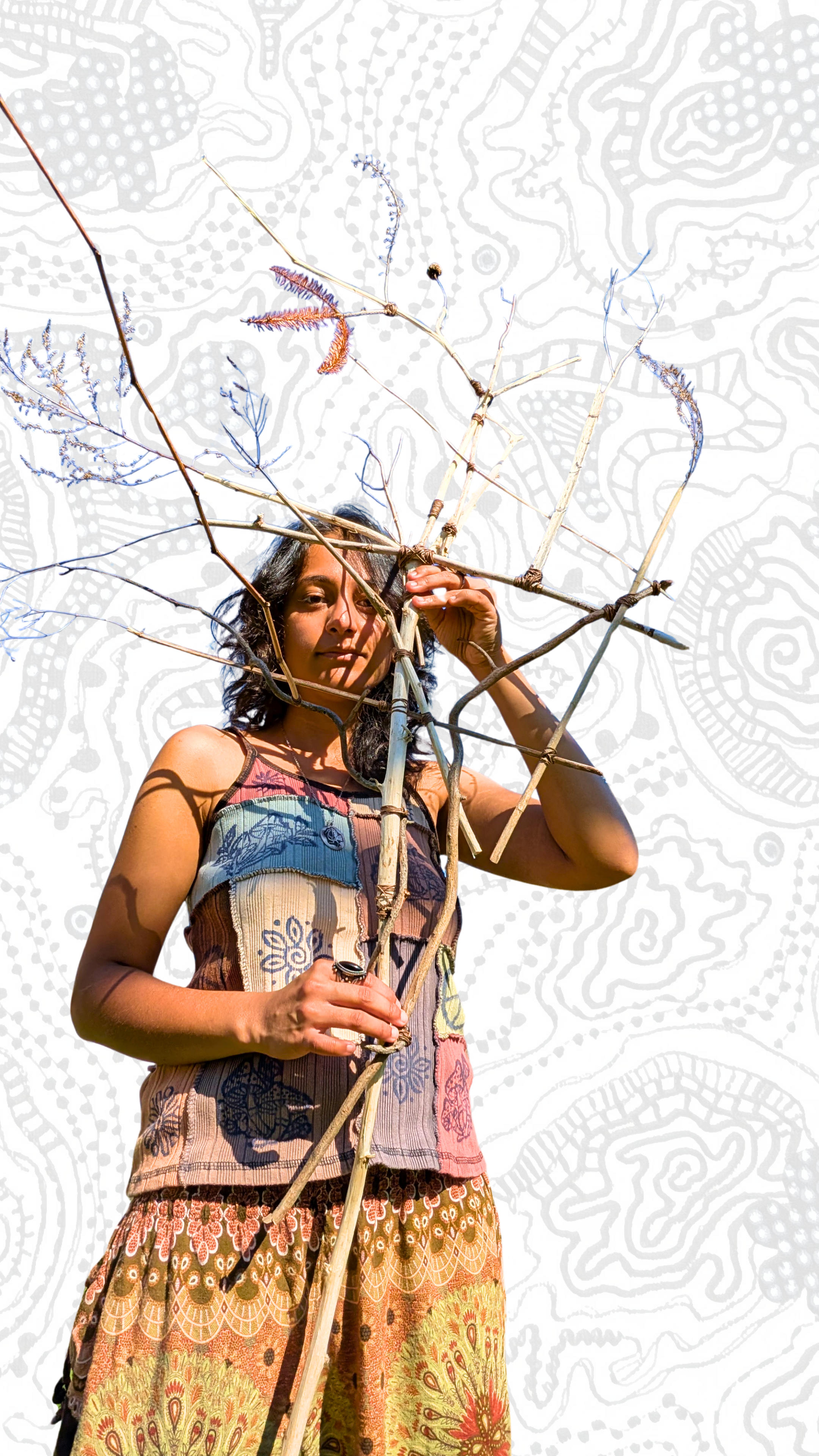
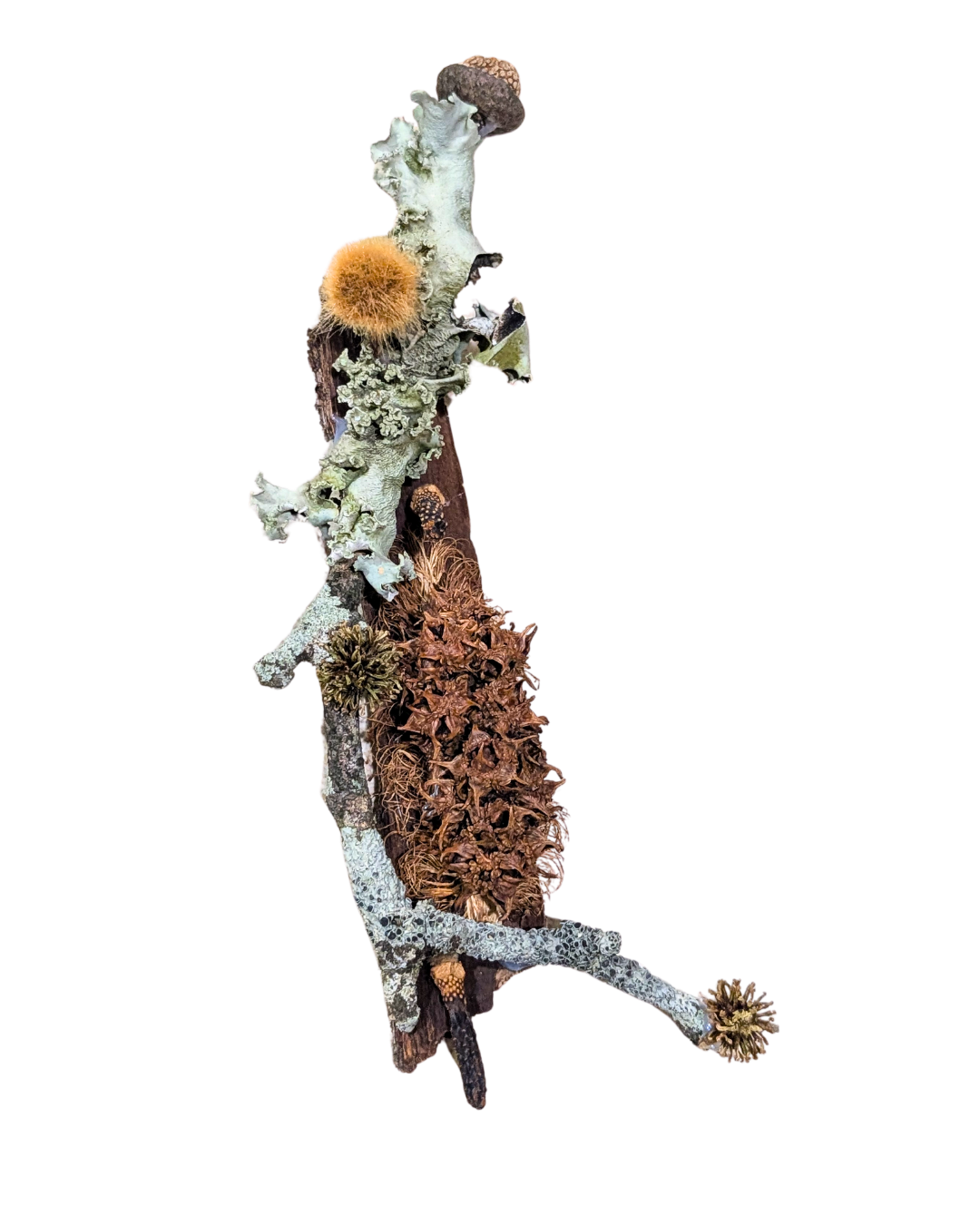
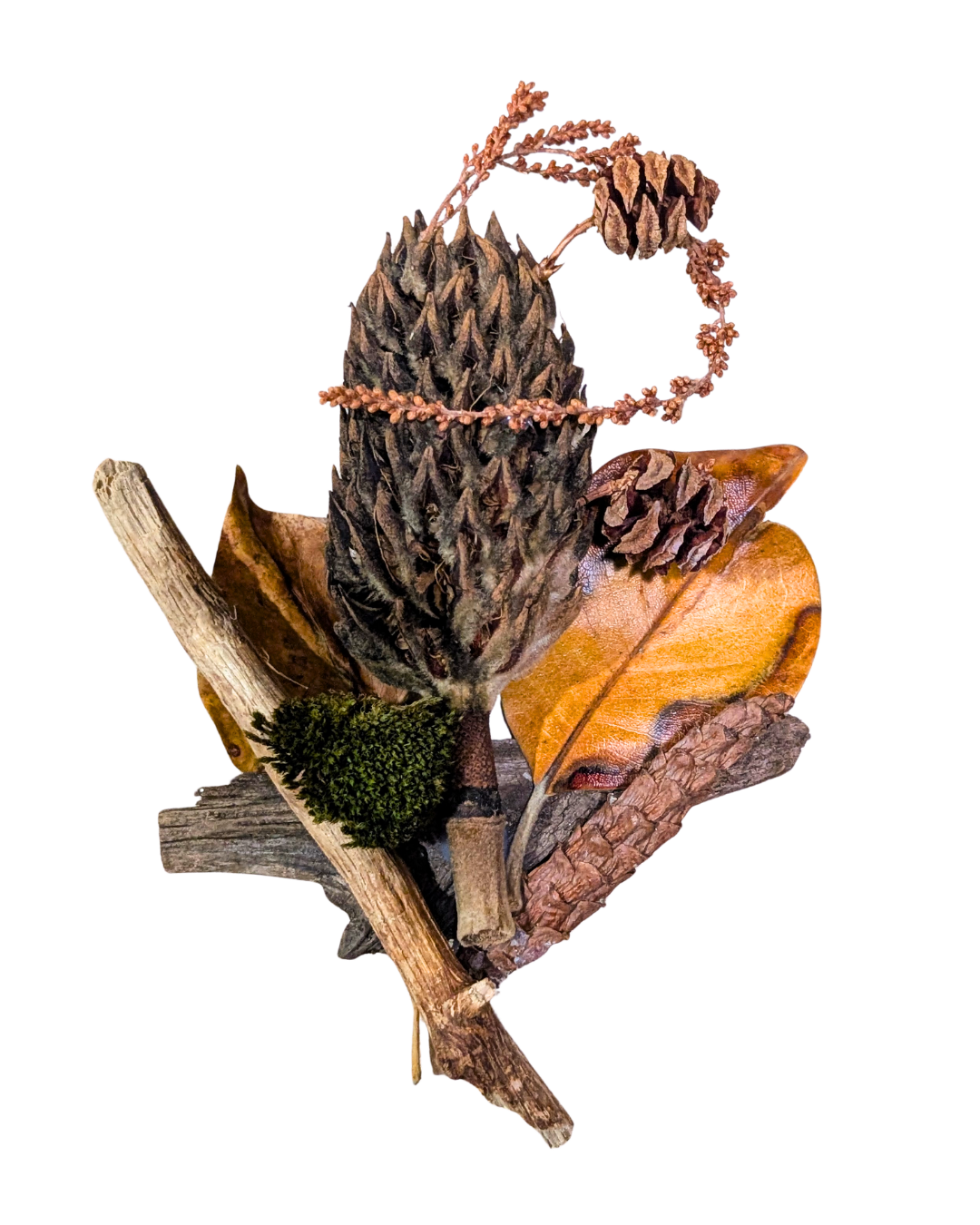
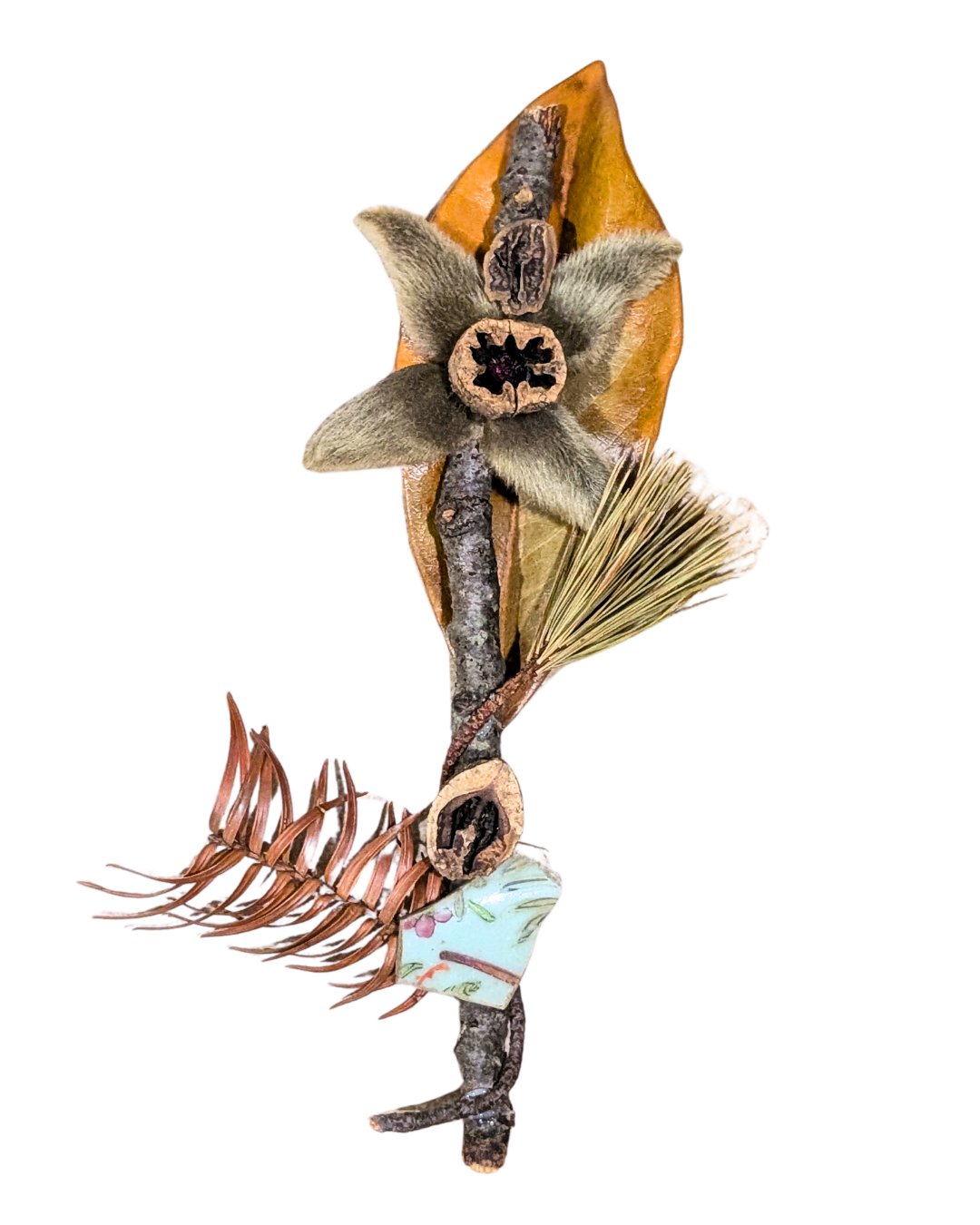
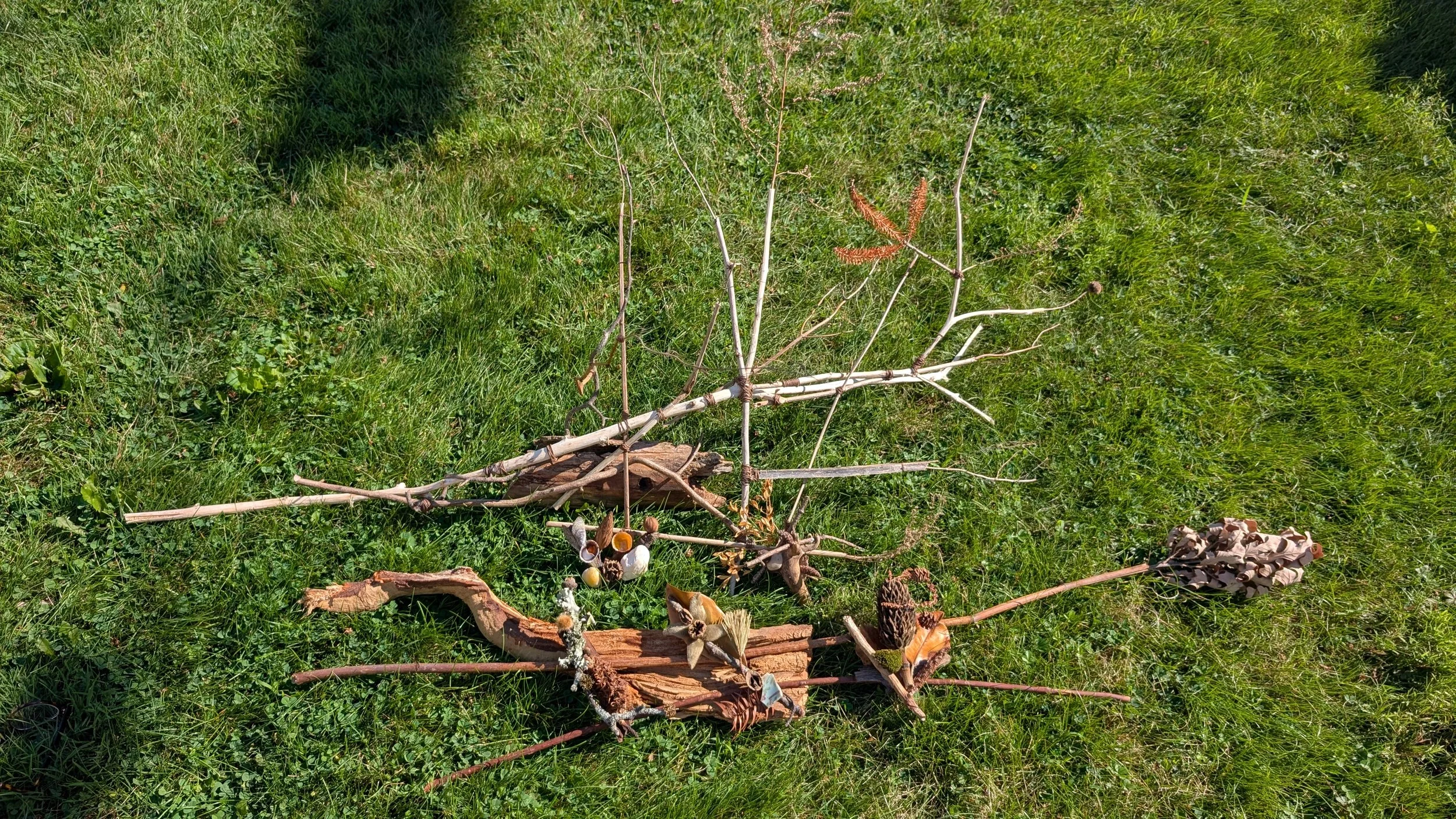
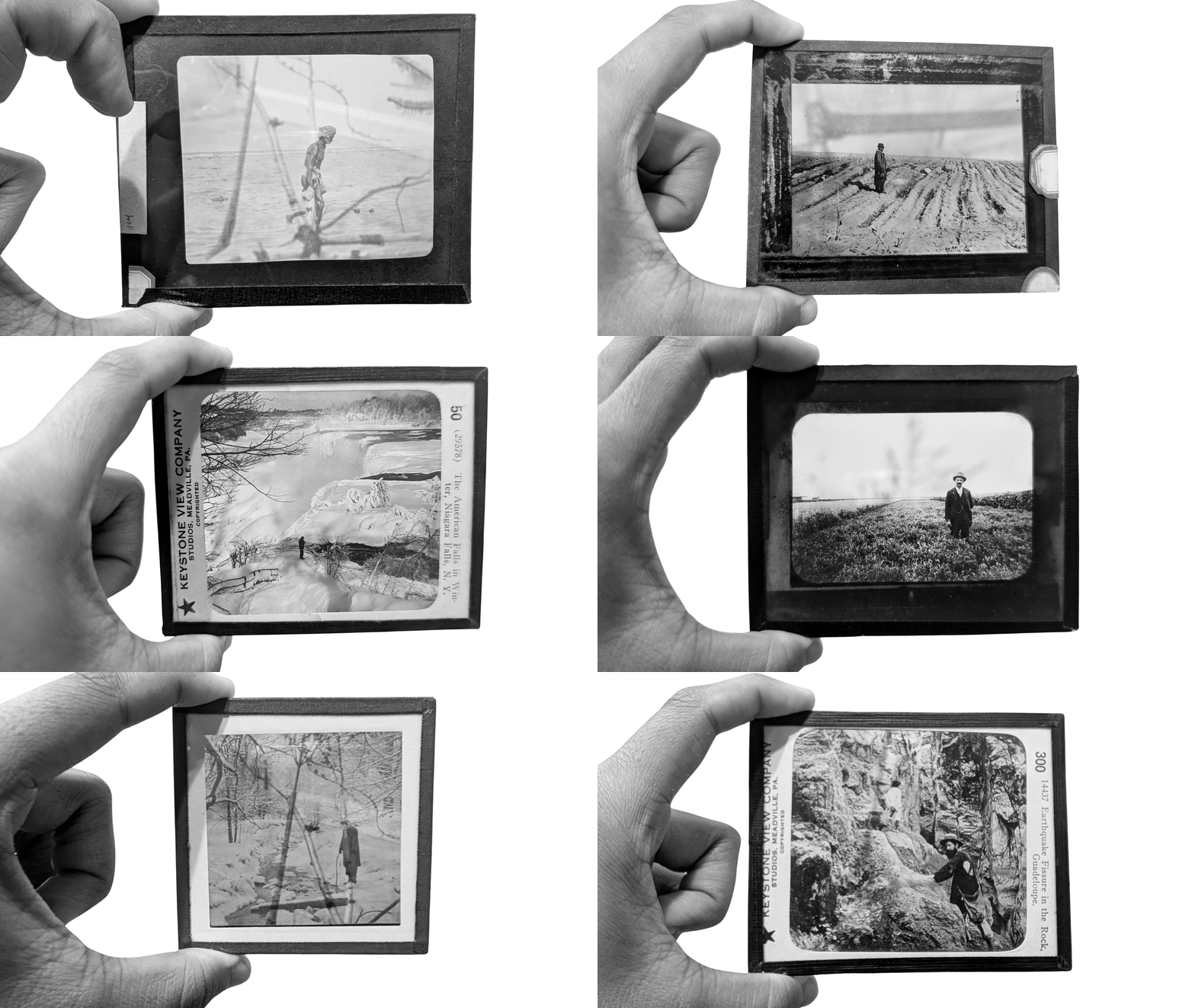
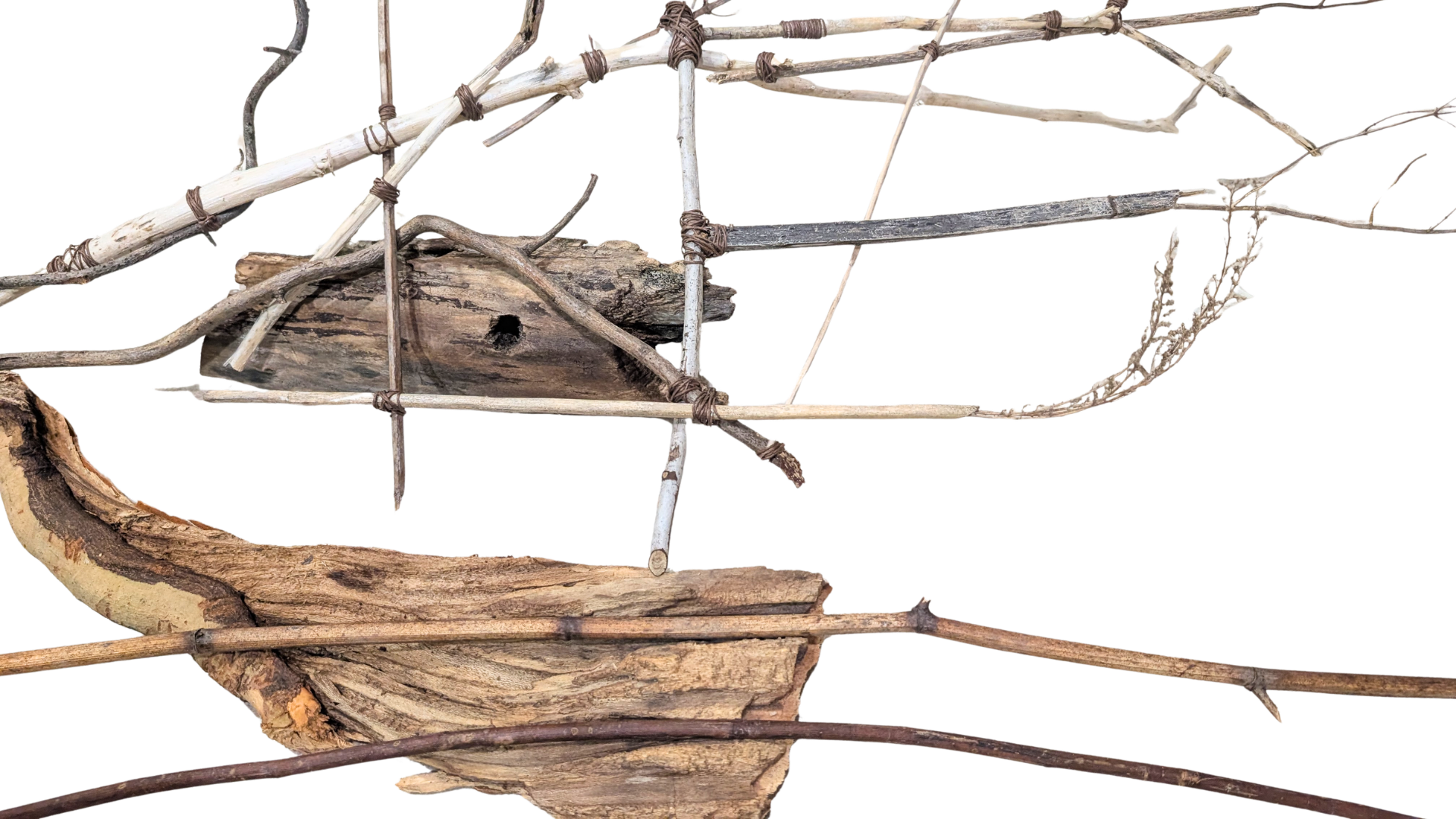
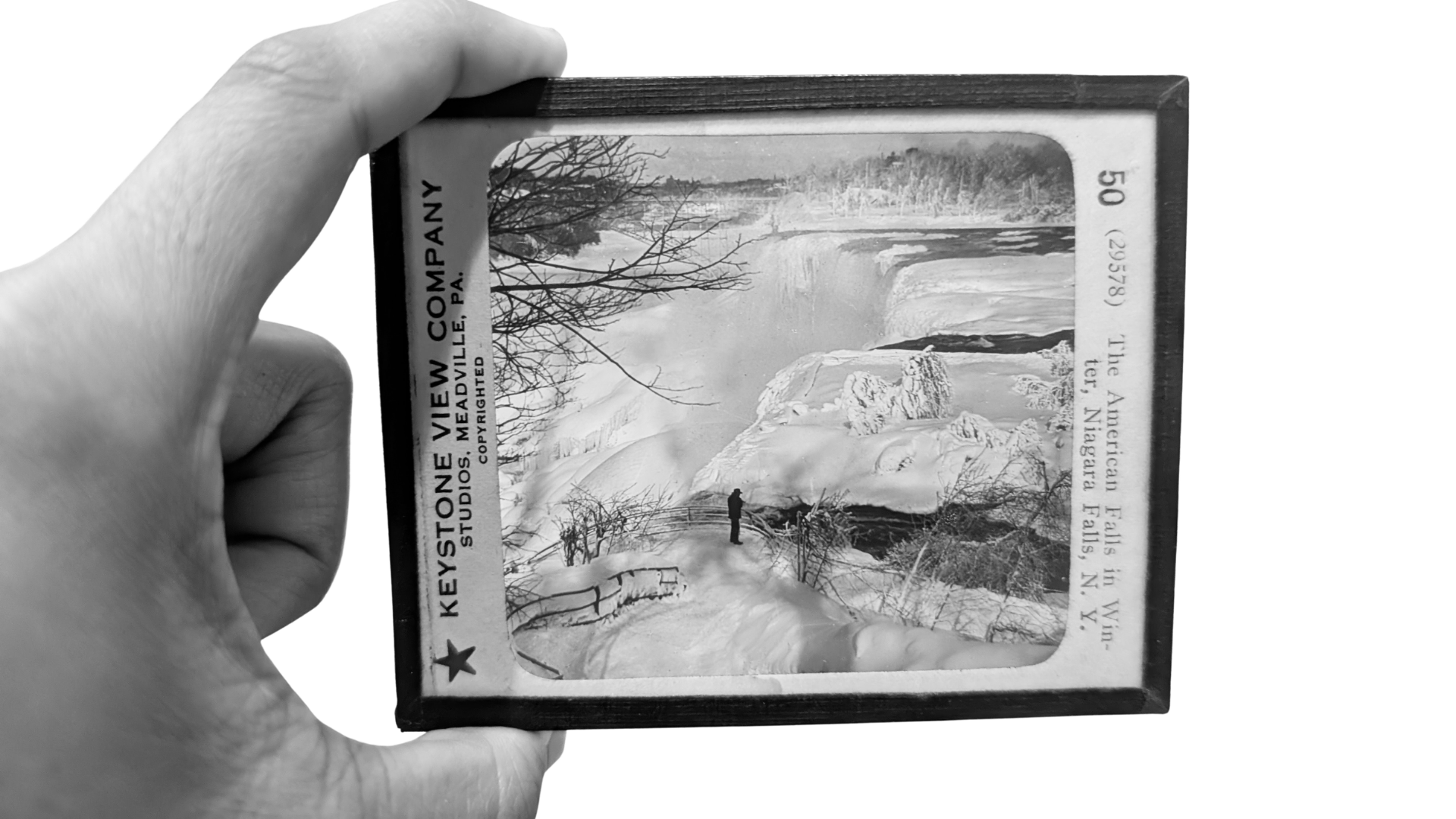
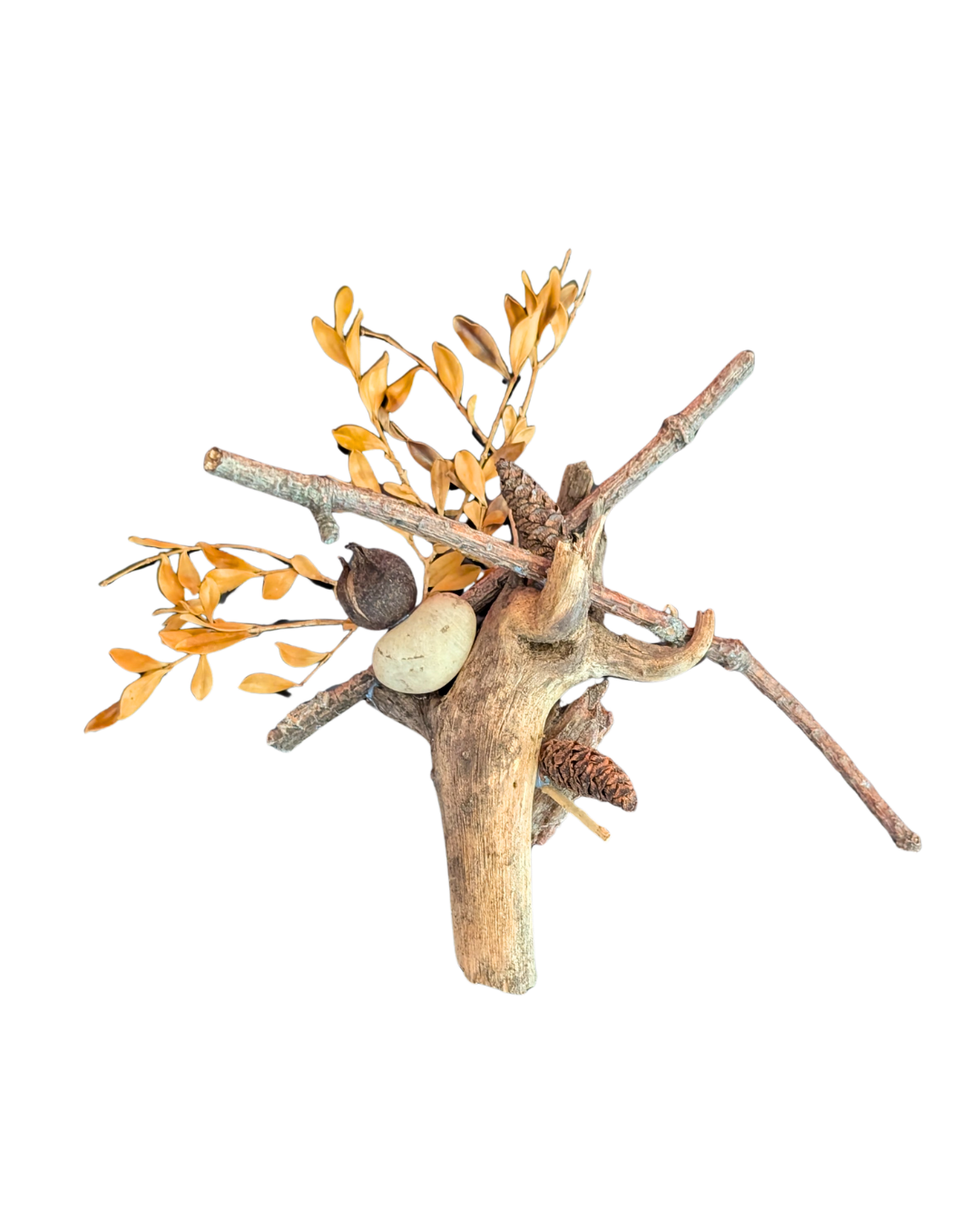
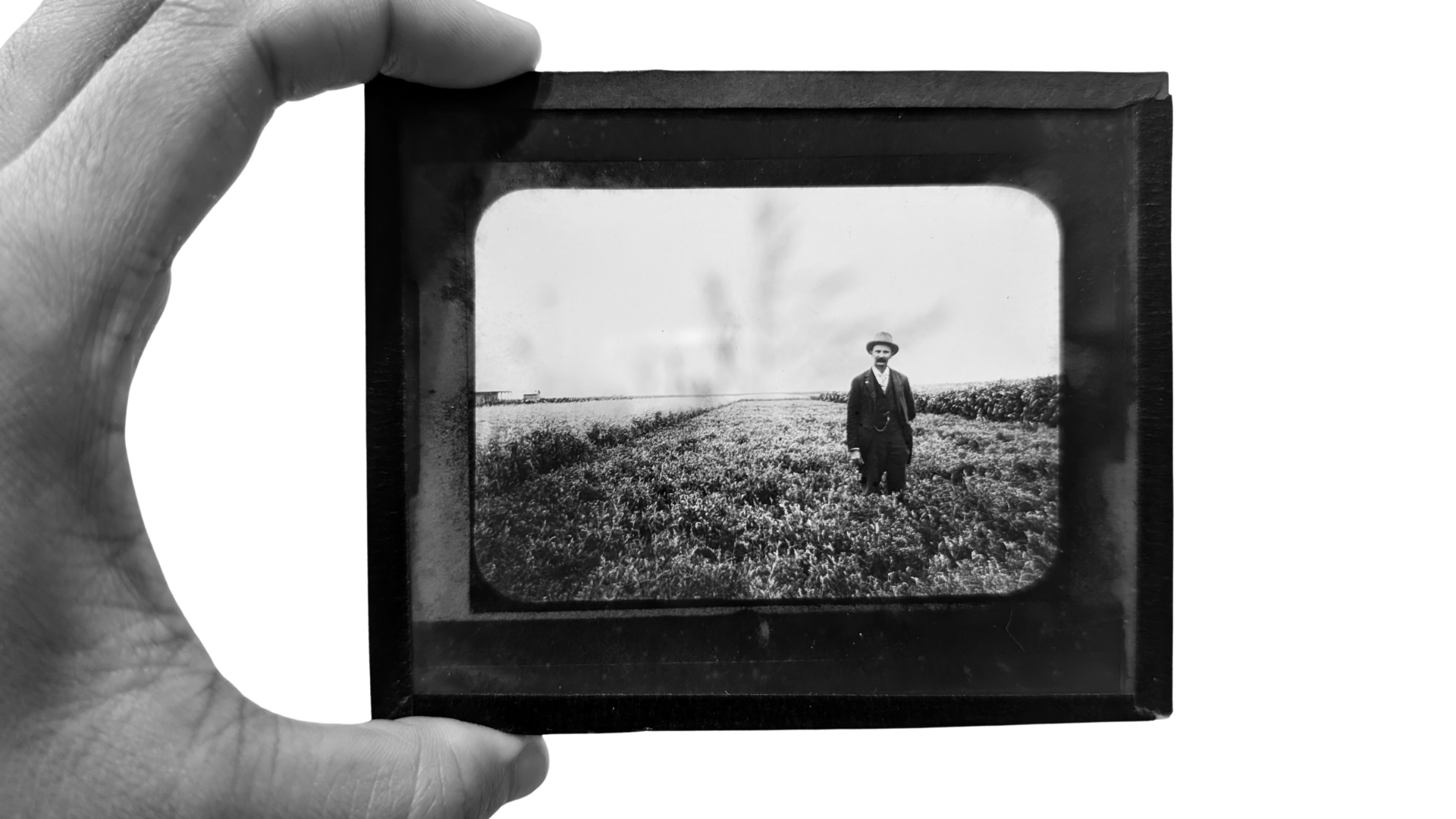
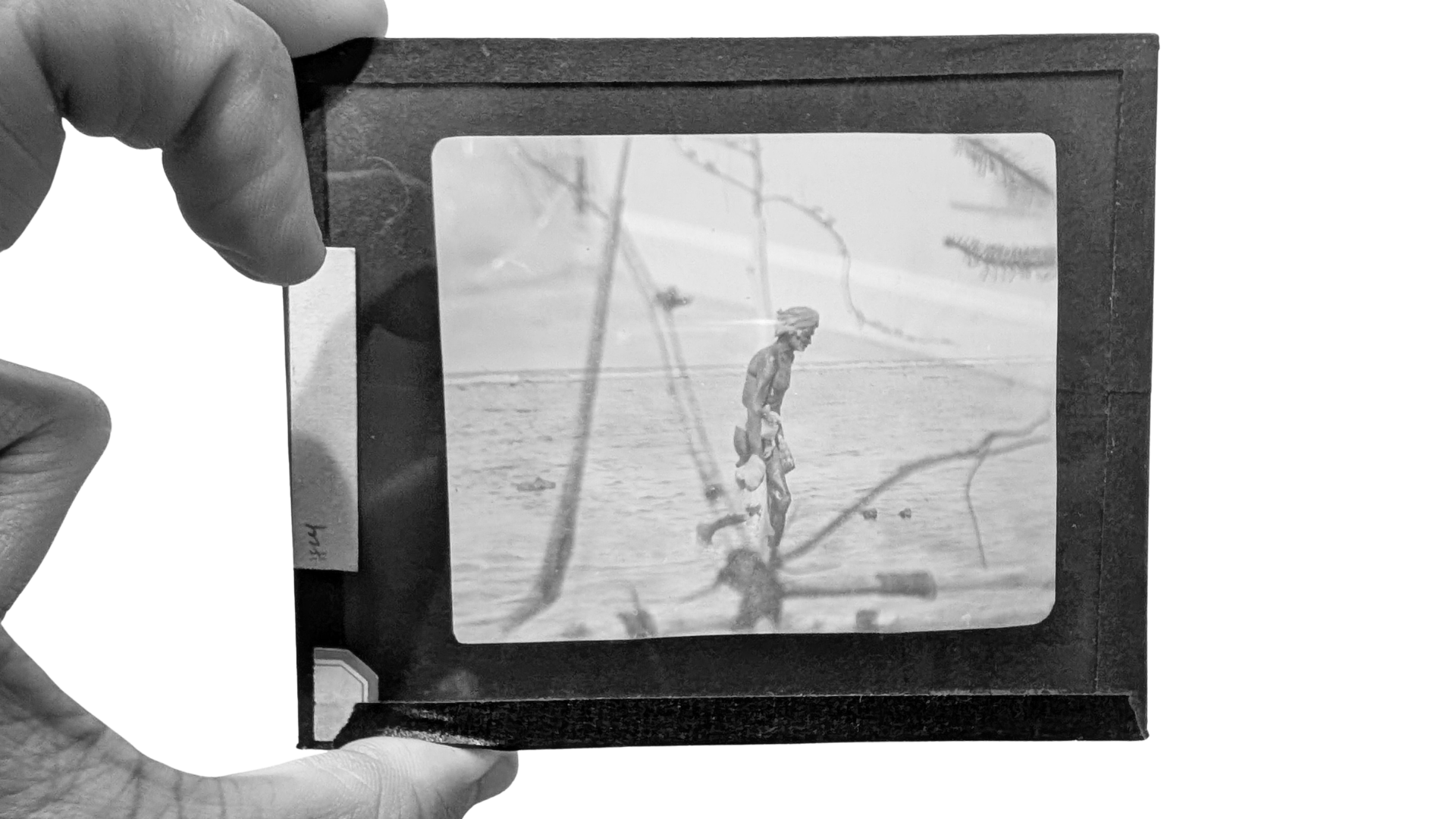
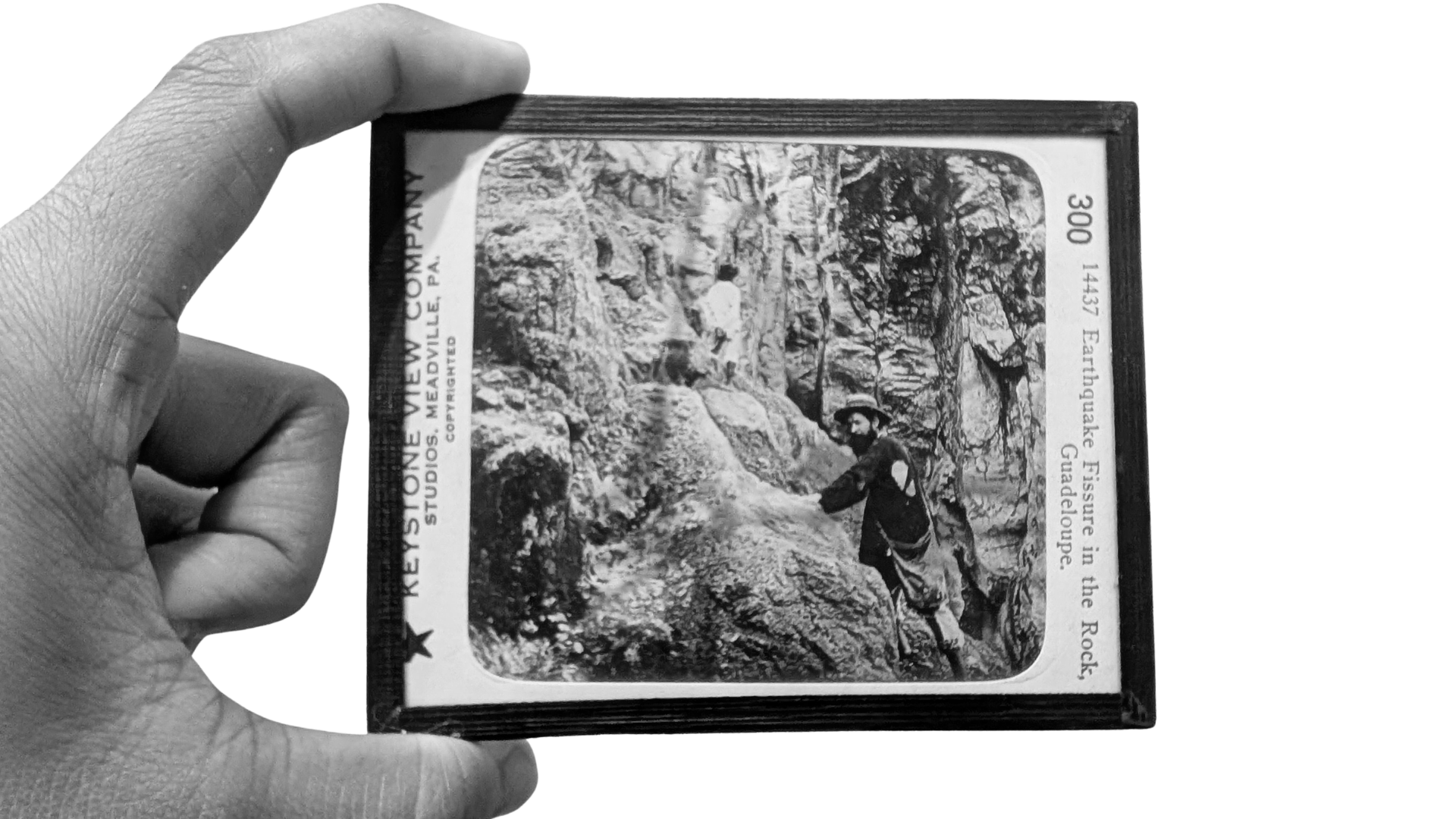
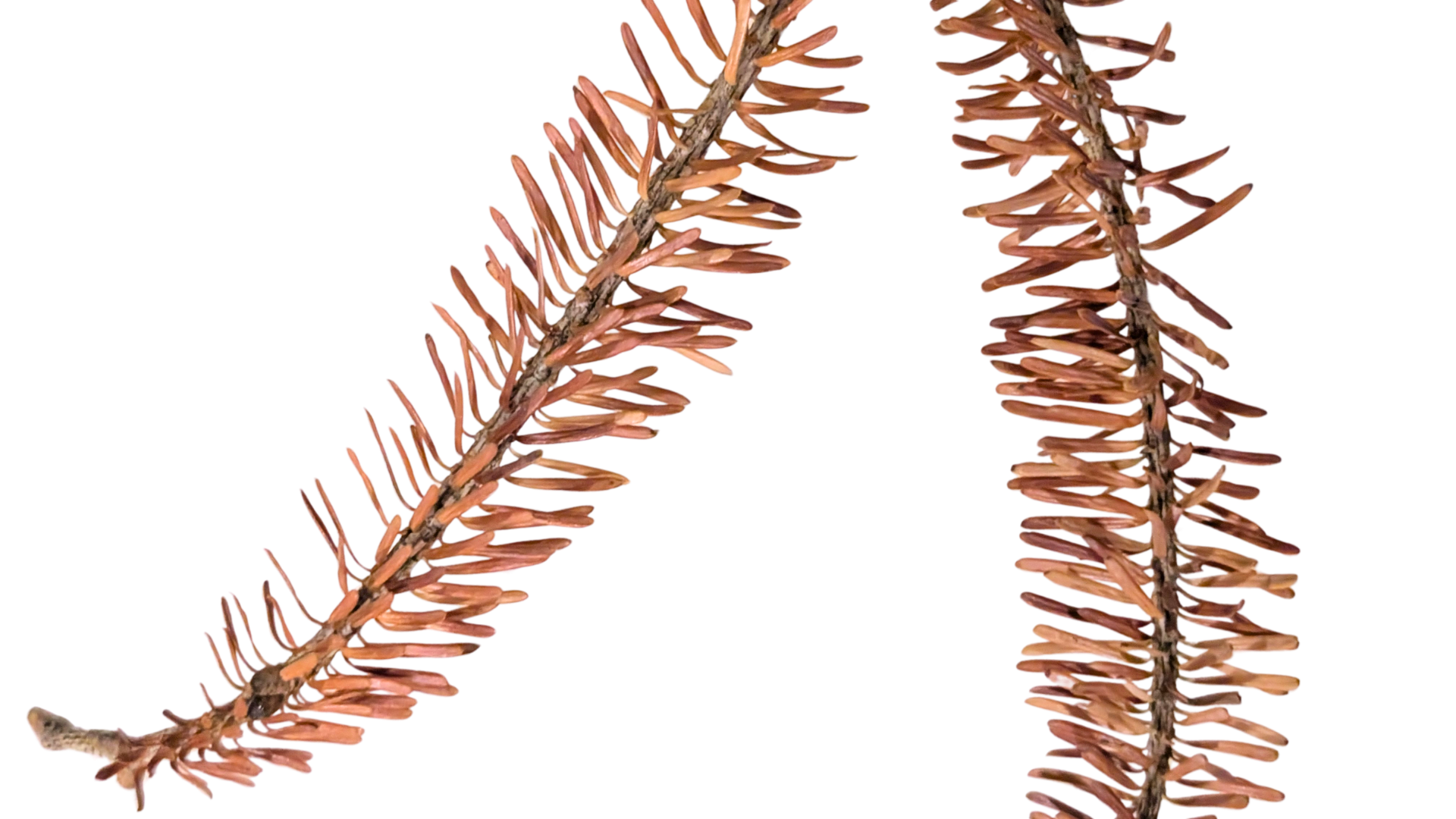
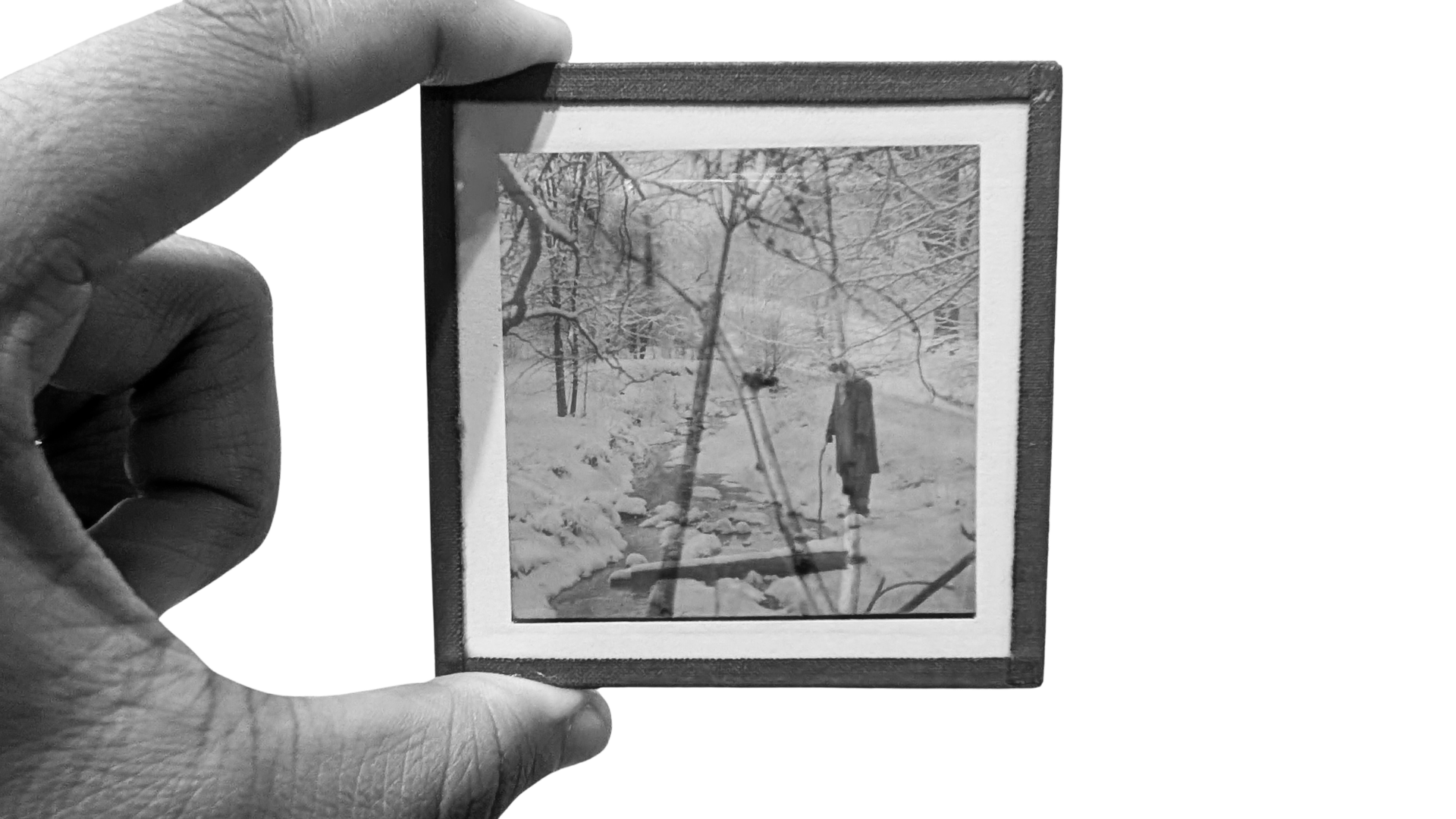
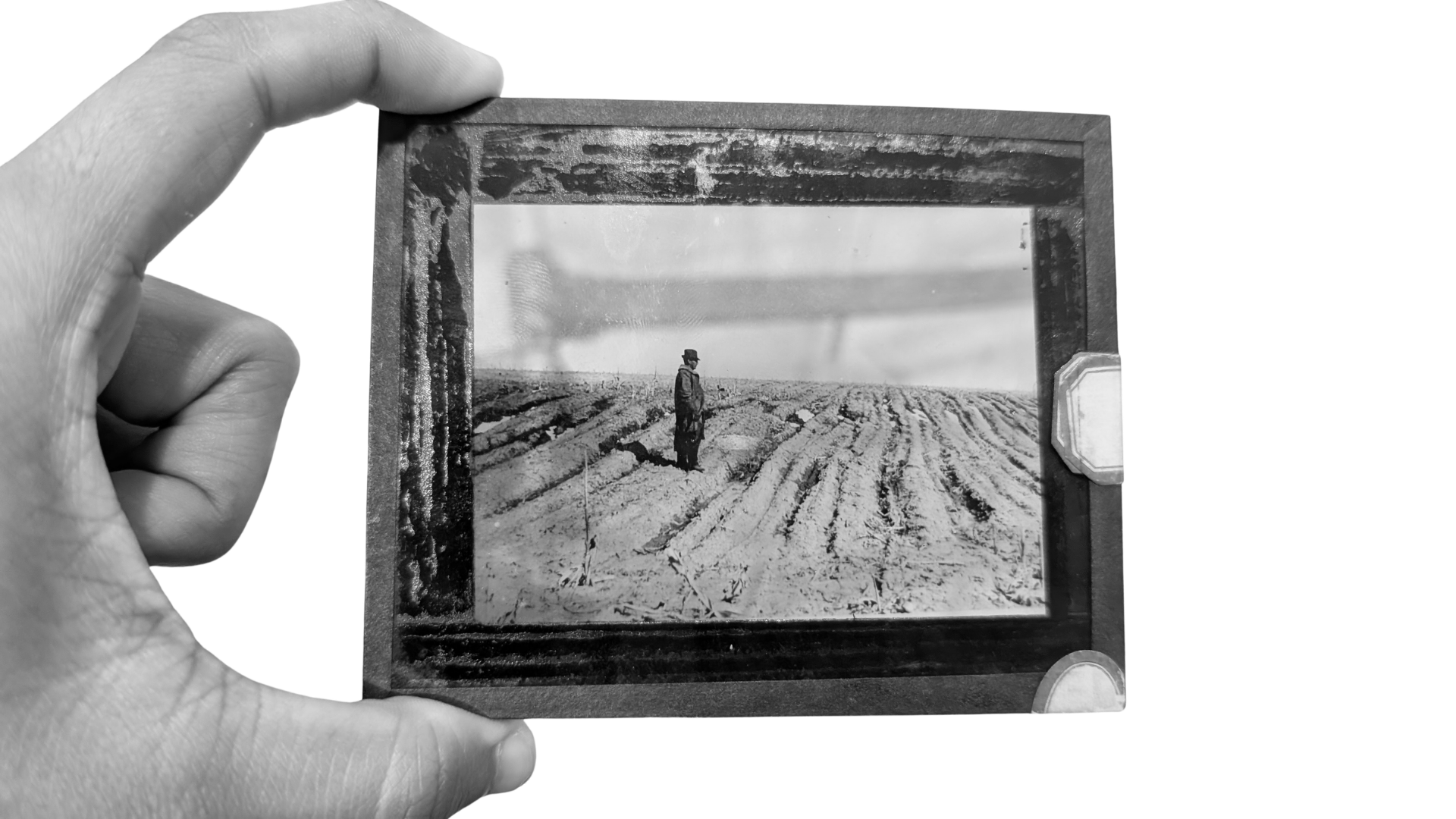
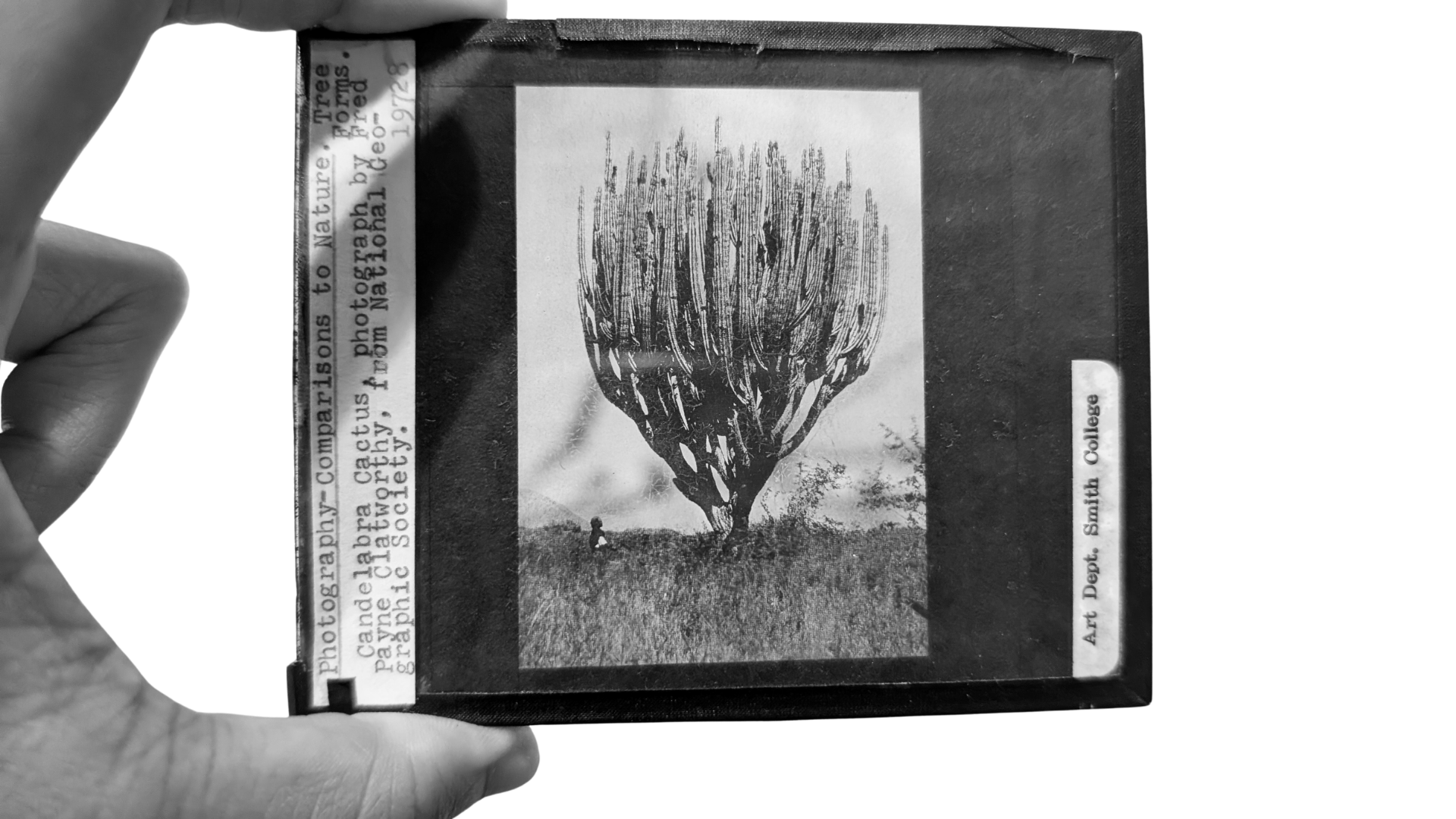
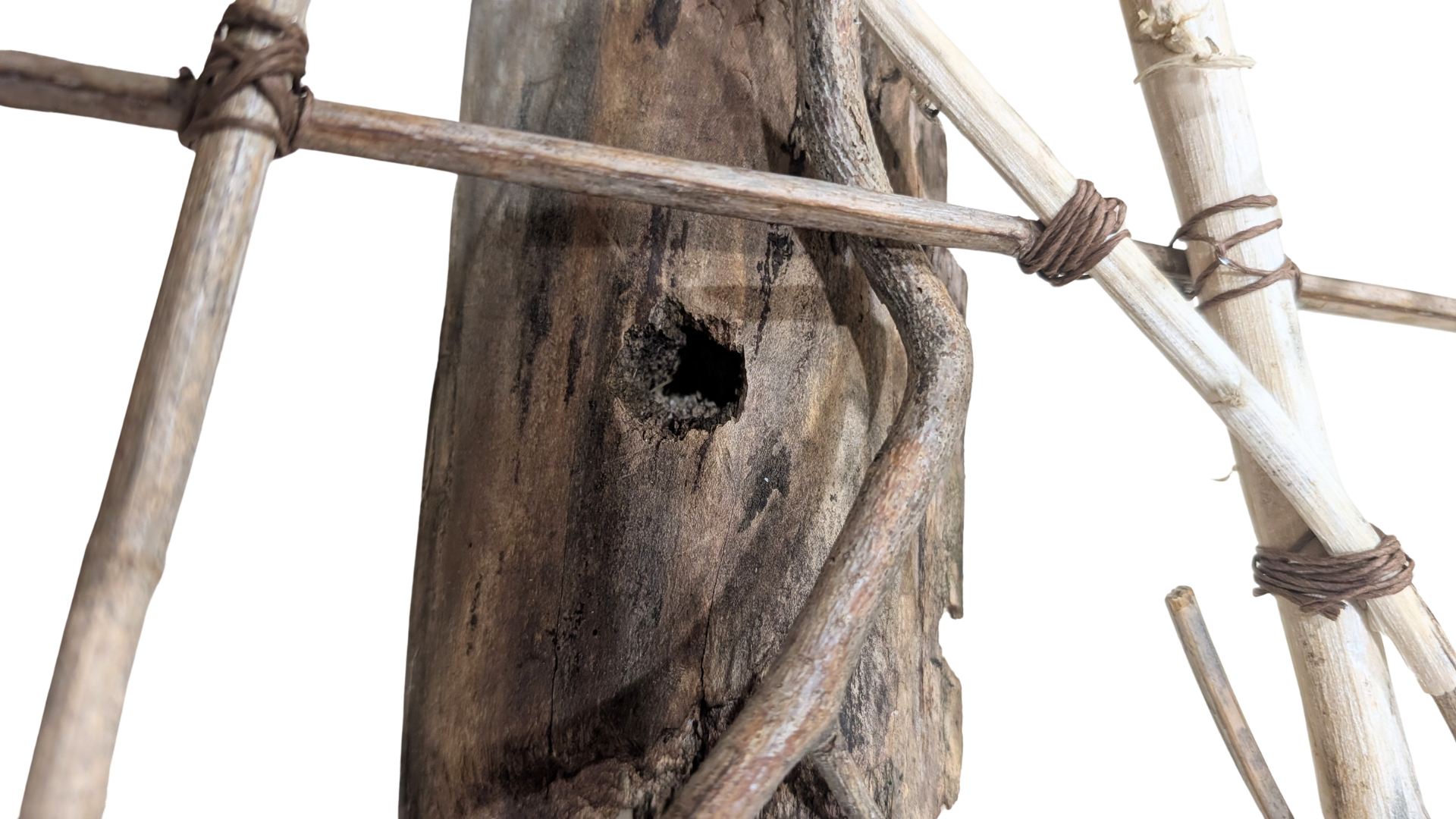
The spine is made from reclaimed materials sourced from Queens County Farm Museum and my neighborhood. The five micro tactile-regulation sculptures are made from materials gathered from five different outdoor spaces that have regulated me. The glass slides, dating from the late 19th and early 20th centuries, evoke the enduring relationship between humans and the environment.
Regulation is accessible. You do not have to buy something to feel better. You can go out into your neighborhood and notice what’s on the ground, above you, and around you. Rest doesn’t have to be bought or earned; it just needs to be whatever restores you.
When I think about 2075, I hypothesize that as we continue to develop technologies that take away our agency and separate us from nature, we will feed a need to experience it, protect it, and be in presence with it.
Regulation isn’t about alienating our anxieties; it’s about expanding our bandwidth to deal with all emotions, even the anxiety that comes with wondering what’ll happen to our Earth by 2075.
If we can learn to look more closely and be in relationship with our environment, whether we live in a forest or an apartment building, we are more likely to lean into caring for it.
The next time you’re in a puddle of your thoughts and you don’t know where to go, maybe just stay here for a while. What can you put together with what’s in front of you, even if it’s broken, even if it's dead, even if it’s discarded?
Today’s science, Jasmine’s climate future

Jasmine Singh
26, Queens, NY
I am a self-taught, multi-disciplinary artist whose work studies the inner landscapes of our nervous systems through shapes, patterns, and materials from the natural world.
As the first-generation, eldest daughter of immigrants from India, I have had to navigate many firsts and lasts. I often felt deeply alienated and misunderstood by my own community because I asked too many questions and resisted the way things were “supposed” to be. I have always felt too complicated, too much, too sensitive. Ultimately, I think my art practice is an act of giving myself permission to release what I have carried for so long—to reckon with the shame and guilt I inherited as a South Asian woman who was taught to feel wrong for wanting more.
I find deep satisfaction in creating work that brings inner processes to the forefront, giving form to abstract, non-visual states of mind. I am open about navigating anxiety, something I have coexisted with since childhood, and my practice has become an extension of that experience—a way of understanding, processing, and building a relationship with my mental health.
Nervoscape is my debut, first large-installation sculpture, built from found materials off the ground in places that have regulated me. My dysregulation is soothed by the natural world, and this sculpture pays homage not only to the ancient wisdom of our nervous systems, but also to the decommodification of our healing process as human beings as we navigate rapid changes on our planet.
I weave between mediums depending on how I feel a mental state will be expressed best. My practice includes sculpture from reclaimed materials, printmaking, acrylic painting, and ink. I also limit the use of intervention and color in my work with hopes of focusing on the marks, figures, textures, materials, and patterns that I have orchestrated.
There are other parts of myself that have also shaped my art practice. I work in the nonprofit sector, where I often piece together information to help make sense of complex things. I am a gardener, bird watcher, amateur entomologist, and jewelry collector. Though these interests may seem unrelated, they share a common impulse: I love looking closely. I am drawn to observing, noticing patterns, collecting fragments, and making sense of what I find.
Nervoscape is a singular expression of all of these threads at this particular moment. I hope it invites others to look more closely at the ordinary things around them, and to discover the extraordinary within them.
Instagram : @jasminesinghstudio
Website: https://www.jasminesingh.studio/