Climate Storytelling 2075

Volume III

Aandishah Tehzeeb Samara

〰️

Brandon McWilliams

〰️

Earl Lin

〰️

Genesis Whitlock

〰️

Aandishah Tehzeeb Samara 〰️ Brandon McWilliams 〰️ Earl Lin 〰️ Genesis Whitlock 〰️

Isabela Valencia

〰️

Jasmine Singh

〰️

Jayshawn Lee

〰️

Khenzom Alling

〰️

Isabela Valencia 〰️ Jasmine Singh 〰️ Jayshawn Lee 〰️ Khenzom Alling 〰️

Kikelomo Sanni

〰️

Lorena James

〰️

Mala

〰️

Mary Kate Cleary

〰️

Kikelomo Sanni 〰️ Lorena James 〰️ Mala 〰️ Mary Kate Cleary 〰️

Namita Davey

〰️

Pa-Shun Hawkins

〰️

Sophia Francesco

〰️

Sophia Steele

〰️

T'Essence Minnitee

〰️

Namita Davey 〰️ Pa-Shun Hawkins 〰️ Sophia Francesco 〰️ Sophia Steele 〰️ T'Essence Minnitee 〰️

Explore Climate Storytelling 2075: Volume III

  • Nervoscape

    A sculpture installation by Jasmine Singh

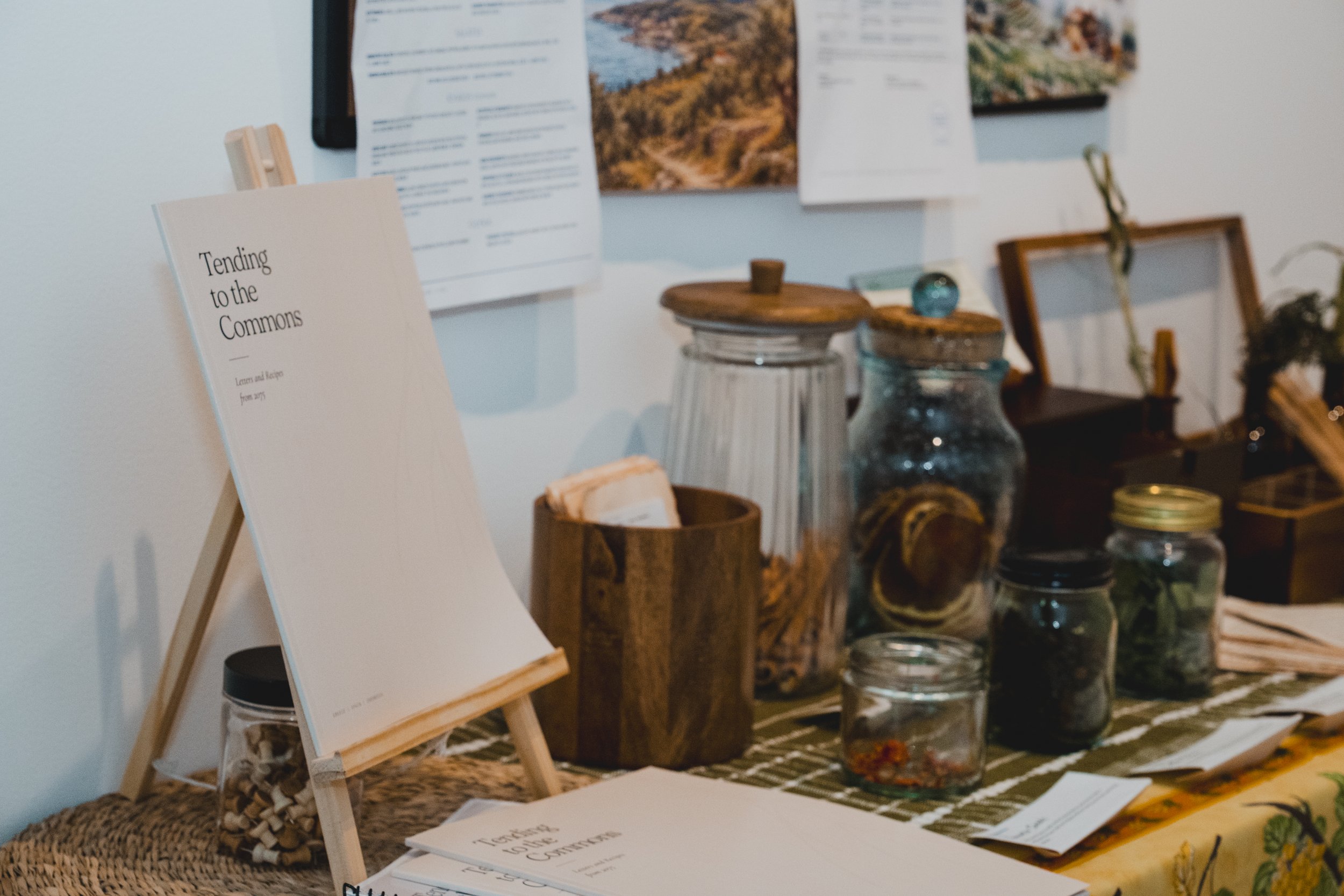
  • Tending the Commons

    A speculative fiction project of letters and recipes by Isabela Valencia

Nervoscape

a sculpture installation by

Jasmine Singh

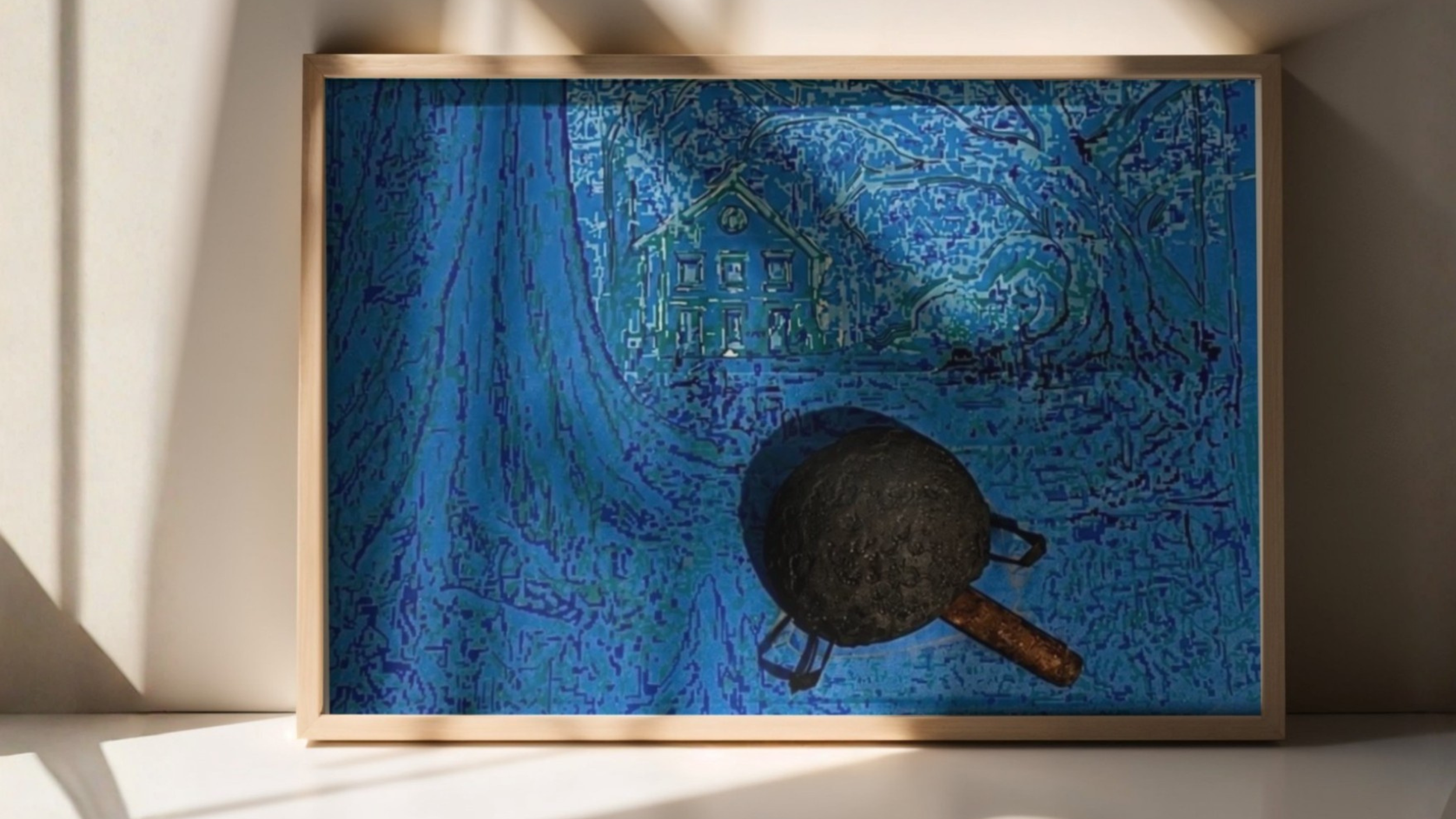
Regulation is not synonymous with calm. It is not about becoming emotionally flat or eliminating discomfort. It is about becoming more malleable — expanding our capacity to move through different emotional states without needing to escape them. Our society has turned healing into a commodity, making us believe it can be achieved through consumption. Capitalism feeds off dysregulation, rewarding self-sacrifice and self-erasure. Our attention is currency in this world of pseudo-healing. I realized what I was being told was not working for me. I could not regulate myself in a dysregulated environment, so I stopped burning at both ends and decided to come home to myself.

Nervoscape is me reclaiming this narrative for myself and for everyone exhausted by over-consumption, over-productivity, and over-everything. Our dysregulation mirrors the exhaustion of our planet, but we can choose differently.

Tending the Commons

a speculative narrative cookbook by

Isabela Valencia

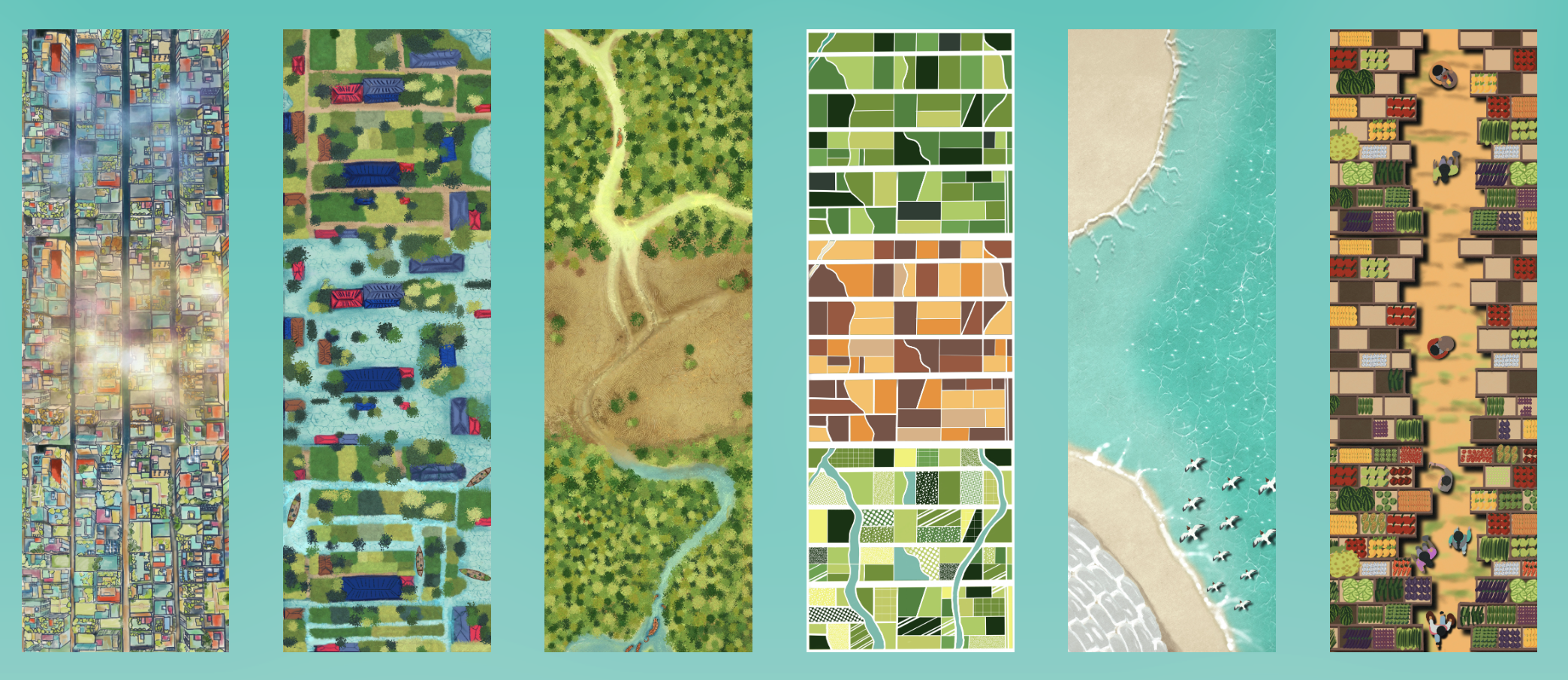
“Tending to the Commons” is a speculative fiction project consisting of letters and recipes set in the year 2075. The work follows six farmers and their families across Greece, Spain, and Indonesia who are connected through a global farmers’ network. They write to one another as the land that sustains them changes.

The ecological changes are clear. Near Kalamata, olive trees are struggling through longer droughts and hotter seasons. Around Murcia, oranges grow smaller as water becomes less certain. In the highlands above Pangalengan, tea shifts toward cooler elevations, while along the Indonesian coast, saltwater moves farther inland. Still, the characters cook. They lose familiar ingredients, find substitutions, and share recipes across borders.

Each recipe card includes a small note about what is missing. A variety of tomato that no longer sets fruit in the heat, fresh dill that has become unreliable, the taste of honey from a hillside whose flowering season has changed. These absences are folded into the recipe instructions, pairing grief with adaptation, and practicality with memory.

Tending to the Commons asks what we choose to carry forward when growing food becomes harder. What does it mean to make room for change without forgetting what came before? Instead of presenting climate change through data or disaster, the installation brings it into the kitchen in the form of a swapped ingredient, a saved seed, and a notebook with scrawled notes.

A distressed woman with glowing eyes, wearing a hat and jacket, standing amidst tall plants in a glowing forest at night, with floating orange and blue lights and dark tree trunks.

Colore

a short story by

Lovinia Summer

& Robin Moulton

Surviving the climate crisis is a practice of world building. We build worlds in which our communities thrive and survive. Storytelling and science fiction play the role of making those worlds feel tangible and enticing. Colore is the story of two communities separated by time but experiencing crises that require a shift outside normal survival strategies. In Hallu in 2030, Amanya (or Ami) discovers a fungi that can help enable communication and goods transfer - allowing for the establishment of a mutual aid network. Forty-five years later in the same region, Quinton later rediscovers the network when a hurricane nearly wrecks his way of life. The story answers the question of how we might survive in a future where we face the crises of a collapsing ecosystem fueled by greed and extraction. It imagines nature and place based solutions as methods for survival. Lovinia and Robin contributed their imaginations to the story, each taking a community-world to build. Christine brings the story to life with vibrant images. This short story is a quick foray into what we hope is a hopeful future.

Echoes of Protection:

Bottle Tree 2075

a multimedia installation by

Kristen Howard

Echoes of Protection: Bottle Tree 2075 is a mixed-media digital installation inspired by the enduring legacy of Southern Black folk traditions, Hoodoo, and West African cosmologies. Drawing from the symbolic bottle trees prominent in southern gardens, the artwork reimagines the traditional blue bottles—believed to capture spirits and shield homes from harm—as luminous digital vessels against a darkened backdrop. Each glowing bottle contains rendered vignettes of preserved ecological memory, invoking both ancestral wisdom and visions of environmental stewardship in a speculative 2075. Through its synthesis of organic form, vibrant color, and immersive light, this piece honors the protective powers ascribed to bottle trees and proposes a future in which honoring nature is synonymous with honoring ancestry and community.

Child wearing a multicolored hat and a mesh veil, outdoors with greenery in the background.

Farmer Armor

a garment design & film by

Harmony Richards

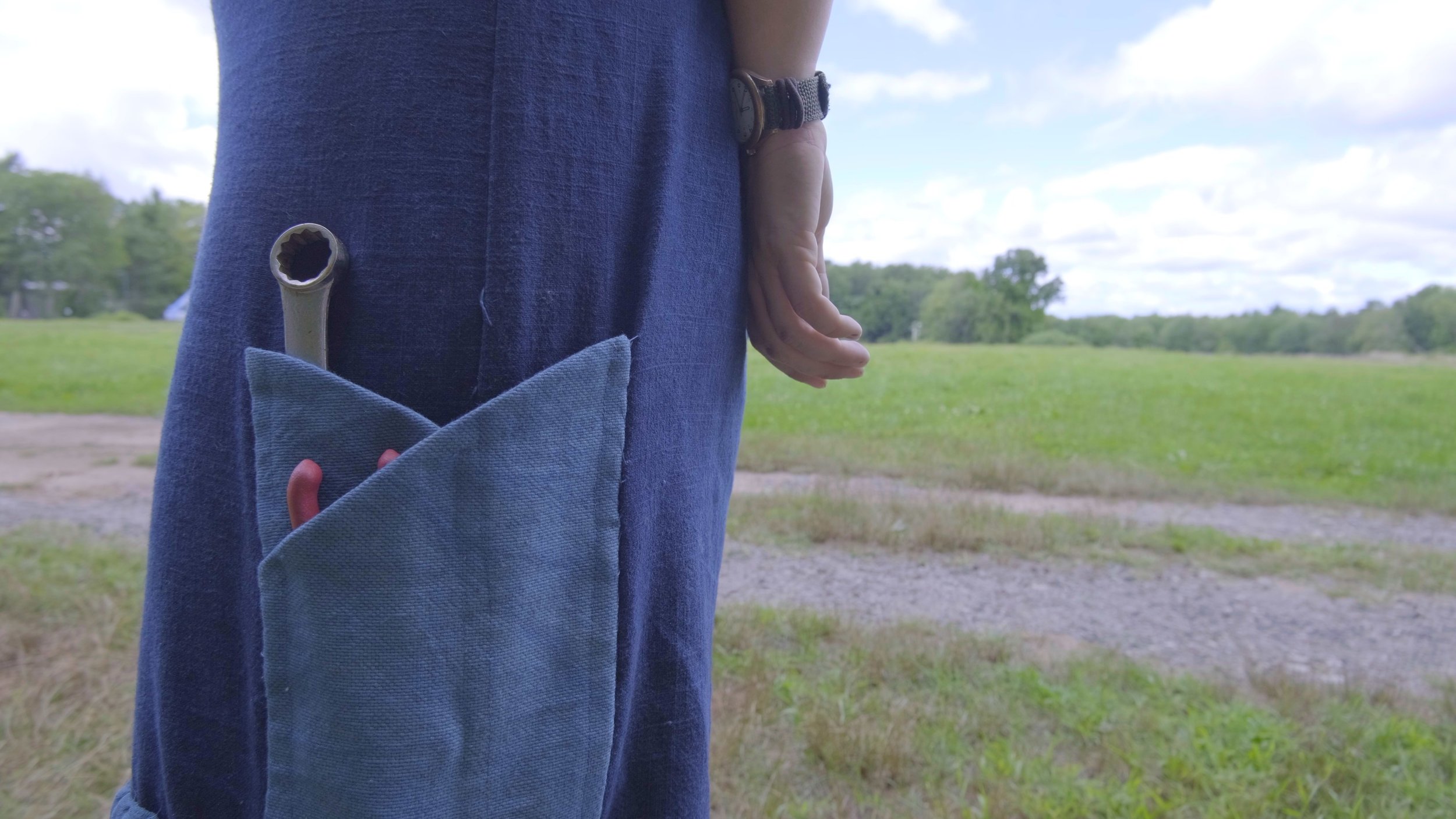
Farmer Armor draws on the visual language of artist Richards’ mixed Japanese and Filipino heritage—symbols like the Filipino flag, the Japanese red sun, hakama pants, and the straw hats worn by Filipino cowboys. These cultural references are woven into the imagined landscapes of California farms, where they meet subtle nods to Americana. The final silhouette of the work is grounded in over 80 hours of field research across several months, during which Richards interviewed agricultural workers about what they might wear in the future. Their stories and visions shaped a narrative that was brought to life using secondhand garments and reclaimed fabric. The result is a piece of speculative workwear—part fantasy, part lived experience. Each element of the outfit was built from reused materials, embodying a patchwork of memory, resilience, and imagination.

An accompanying video deepens the narrative, following a figure farming in a surreal, future landscape. Walking through avocado groves, they wear not just clothing, but the layered hopes and histories of today’s farmworkers.

Imagínate Los Ángeles

Empty bridge with arched design and city skyline in the background on a clear, sunny day.

a film by

Crystal R. Barajas Rivera

Imagínate Los Ángeles is a short documentary in Spanish that centers on voices from the artist’s neighborhood. Through simple but profound questions–"Si pudieras imaginarte el futuro, cómo sería?" (“If you could imagine the future, what would it look like?”) and “Cómo imaginas el futuro climático o el medio ambiente?” (“How do you imagine the climate future or the environment?”)—the film invites everyday people to imagine and share their visions of the future. Their responses are compiled and accompanied by English captions to make it accessible to a wider audience.


The work not only documents spoken words but also captures the immediate environment of each interviewee. Storefronts, sidewalks, murals, and the environments of Los Angeles’ streets become part of the narrative, grounding each imaginative response within a lived place. This approach allows viewers to feel both the presence of the speakers and the community they live in.


The artist’s role in shaping this work is deeply rooted in place and identity. Having grown up in Koreatown, she created Imagínate Los Ángeles using only her iPhone and a microphone, walking just a few blocks from her home to engage with neighbors willing to share their voices. Her position as a Spanish-speaking resident of Los Angeles uniquely situates her to bridge linguistic, cultural, and geographic divides. By recording these local conversations, she elevates perspectives that are often underrepresented in dominant media portrayals of the city, while also acknowledging that many voices in her neighborhood remain unheard. Her goal is to create space for imagination as an act of resistance and care.

A detailed illustrated map of the Philippines showing different regions and landmarks, including a central city with tall buildings, telecommunications towers, and various islands labeled Biliran, Samar, Leyte, and others, with geographical features such as mountains, forests, and water bodies.

KARTAng-Isip

a climate fiction & speculative map by

Pamela Lira

Project KARTAng-Isip is an act of imaginative cartography, mapping the possible futures of the Philippines through the lens of climate fiction. Borrowing from kathang-isip (fiction) and karta (map), this anthology of short stories envisions the archipelago’s future over the next 50 years, exploring the diverse realities of each region.

The first story, Of Steams & Storms, is set in the Philippines’ Eastern Visayas in the year 2075. The region comprising Leyte, Samar, and Biliran stands at the heart of typhoon landfalls with its landscape cut by the Leyte Fault; however, after decades of disaster, the long-whispered myths of Biringan now emerge as a renewable energy utopia. Through the eyes of Paula, a young Biringan intern, the story follows Eli, a seasoned stormsaver, as they navigate a megatyphoon in a journey to reunite with a long-lost love.

At the heart of this work is countermapping, a method of reclaiming space, voice, and vision. The Philippines, consistently among the most vulnerable countries in the world, is often depicted only through the lens of disaster. Project KARTANG-ISIP disrupts that narrative by charting a different map: one where Filipino communities are not merely victims of disasters, but changemakers.

The accompanying map, built from Copernicus DEM data, reimagines Eastern Visayas through animated geovisualization. It is an ode to the 1734 Murillo-Velarde map—hailed as the “Mother of all Philippine Maps”—bridging historical cartography with speculative storytelling of the Philippines’ futures.

In merging storytelling with spatial imagination, it frames the climate crisis as a question of who decides what the future looks like? Who gets to survive, adapt, and thrive? It also asks: What could a just, livable future look like in a country where climate disasters have become the rhythm of life? In every story that will follow, the environment and climate becomes both context and character: a force that reshapes land, love, memory, and the very structure of society.

Letters On Care

Silhouettes of a couple walking on a beach during sunset with the sun shining brightly in the sky.

a story through letters by

Cindy J. Xie

"Letters on Care" is an epistolary story written in the form of letters between two sisters, separated in childhood by their parents' return migration, in the year 2075. The piece alternates between memories of their past, as well as vignettes from their current work as a public health practitioner and an environmental artist, respectively.

Through an interweaving of planetary crises with personal narrative, the story asks how we bring the impacts of climate change down to the human scale, and what care between individuals and community members looks like in the face of growing uncertainty. Contrasting against universalizing narratives of environmental and climate crisis, small windows into daily life reveal the actions of care we take for ourselves and others as avenues of survival, and resistance.

Litha

Decorative art piece resembling a large, stylized human lips with bright yellow, orange, and red colors with blue dots, set outdoors at the base of a tree with grass and sidewalk visible. Gold coins are scattered on black fabric in front of the art.

a wearable sculpture and costume by

Elizabeth Dawson

This West African inspired mask and accompanying garment venerates the body of the Cowrie Snail. Through traditions of dance and ritual across Africa, it is common for spiritual beings, deceased family members, and deities to be routinely remembered and honored. The Cowrie Snail’s history exploitation through commodification parallels that of enslaved African people around the continent amidst species endangerment from overharvesting, pollution, and other effects of tourism. This piece acts as a proposal to recognize the Cowrie as an ancestor, healing our related grief through movement and creativity. Using the motifs cultural significance as a symbol of abundance, this piece reminds us to honor our grief within oppressive capitalist systems that feed off of scarcity by remembering what is valuable to us as people. This way, we place our worth and those of living things around us as intrinsic rather than extrinsic, causing us to see ourselves and the world with more care. The future, regardless of the systems that run it, needs more routines that remind communities of their own values and commitments to nature. The artist believes that when these values are the foundations of a community, the world around us can change for the better.

The Living Thread

a multi-sensory installation by

Summer Dean

& Laiyonelth Hurtado

Interior art exhibit featuring a geometric wooden structure with hanging textiles and a mannequin dressed in patchwork jeans and a layered, floral necklace, near large windows that let in natural light.

The Living Thread is a multi-sensory dome in which visitors are invited to explore the role that fashion will play in healing our relationship with the planet in 2075. In this piece, artists Laiyonelth Hurtado and Summer Dean envision the fashion industry of 2075 as a living organism that actively heals the land, nurtures ecosystems, brings people together and empowers individuals to become active creators, not just consumers.

The seven-level design of the dome’s exterior references the Seventh Generation Principle— an Indigenous Haudenosaunee philosophy dating back to 1142 AD— which states that the decisions we make today should result in a sustainable world seven generations into the future, as a way to honor the land and wisdom from the communities where this piece is being conceived. From the ground up, each level of the dome is intentional— representing our collective relationship with mother earth, from our foundations, to past, present, and future. As each level progresses towards the top, the viewer will begin to notice the advancement of sustainable materials that reference sustainable traditions from the past; including moss, hemp, and linen, upcycled textile waste from the fast fashion industry, and current fabric innovations like algae biotextiles and coffee leather. As the viewer enters the dome, they are immersed in a multi-sensory experience with audio meditations, speculative storytelling, and hands-on interactive activities exploring how the fashion industry was able to reach ecological balance by 2075.

Through an intersectional and afrofuturistic lens, the installation presents an optimistic outlook of the future, where people simultaneously celebrate moments of shared human victory and remember and acknowledge the mistakes from the past to work actively to prevent injustice. The living thread envisions a fashion industry that understands and embraces the political character of fashion and helps shape a world where everyone thrives and lives in abundance.

An outdoor research project display board showing various nature and environmental materials, including leaves, a color wheel, notebooks, and glass jars among grass with shadows cast from nearby plants.

MIDWEST GIRL

ARCHIVE 2075

a multimedia photography installation by

Makayla Harrison

Across the earth, for many years, we have been able to see the stars at night. With the rise of artificial light pollution, environmental racism, and climate change, we are losing our freedom and accessibility to connect with the stars. Makayla Harrison, a biracial British, African American multidisciplinary artist and Midwest girl, invites the viewer to imagine a future where freedom and access to the stars is not inhibited by light pollution. Through Harrison’s work, she transports viewers into an exhibition space in 2075 that highlights and reflects aspects of the Midwest Girl’s environment and life with dark sky access. Incorporated in the exhibition are photographs that the Midwest Girl made with negative and positive transparencies of galaxies millions of light years away, made with the cyanotype process at night.

Also featured is The MIDWEST GIRL ARCHIVE, an interactive book for 2075, that preserves journals, photographs, cyanotypes, postcards, found natural objects, and tools that a Midwest girl uses in the future — emphasizing the reality that we have started to plant, care, and maintain seeds for a world where we prioritize social and environmental justice in our day to day lives. Makayla also cultivates a space for written notes, poems, and small artworks from other Midwest girl artists within the archive that recall their future, imaginations, and ability to connect with one another in ways that allow us to live with our ecosystems and environments in 2075. Harrison thinks of the MWG archive just like the seed-keeping vaults in the Arctic. It is a way to ensure, for generations, the seeds of hope for tomorrow.

my grandma’s garden:

beyond resilience

A woman standing among tall green corn plants in a rural farm, with hills and a cloudy sky in the background.

a woven sculpture & installation by

Anastasia Onyango

“Me and you, we got more yesterday than anybody. We need some kind of tomorrow.”
~ Toni Morrison

By 2075, we will each have our own kind of tomorrow. By then, we will be beyond resilience. Because embedded in resilience is having to weather unfailingly the circumstances that have made us have to adapt. By then, we will no longer be in a state of survival mode but have achieved a dynamic with our surroundings that centers mutual care.

My grandma’s garden represents this lesson to me.

I have witnessed how my grandma tends to the cilantro saplings in her greenhouse before they get planted. How she can hear the sound of sweet potatoes under the earth before harvesting them. How she threshes the bean stalks after they have been sun dried. We are nourished by her garden’s maize, pumpkin leaves and green peas. And also the sisal plants, whose threads become baskets that we use daily. It’s this traditional Kamba practice of weaving that my grandma gifted me three years ago and it is through this medium that I most appreciate ​​the generational love and knowledge espoused by her and the emotional connection she has to her land.

And given that I am still learning our language, she taught me all of this without English, without words.

This installation encapsulates that feeling of safety and sanctity. The feeling of being at home on this Earth...an all encompassing appreciation…because you can feel how an ecology is sacred…because you can feel an abundance of nourishment.

A red door with a modern silver handle set into a round black frame on a brick building, with a black metal grate leaning against the wall to the left.

The Red Door

a story & score by

Michael R. Dudley, Jr.

“The Red Door” is an intermedial work of prose and sound that is an exploration of family, nostalgia, and optimism set in a future living with climate change. The two parts—a short story and musical selection—offer an intimate portrait of what life could be like for someone who was born into the climate crisis, not knowing what life was like before globalized climate migration and mitigation efforts. The story follows the protagonist, Theo, over the course of a few days as she commutes to work at a facility specializing in carbon capture by harnessing algae’s photosynthetic process. Sounds from the story are remediated to become part of a musical atmosphere to enhance the experience of the reader at their own leisure. It asks how our ideas about hope, labor, and giving may evolve over the next 50 years as we engage with loss, change, and different imagined futures, even within the same household.

Silence of Echoes

a film, book, and rug by

Byssan Samny

Title page of a documentary titled 'Silence of Echoes' with images of Moroccan women in traditional clothing and photographs, and Arabic and English text.

Silence of Echoes is a journey, a return to the land, to my Moroccan roots, and to the women whose wisdom has shaped me. It holds a quiet truth: we have always known how to live with the earth, moving in rhythm with its breath, guided by care, patience, and love. Our rituals, Indigenous knowledge, and ancestral practices carry the answers we are still trying to name.

At its heart, this work is a love letter to the land of my birth, to the hands that continue to tend it with care, and to the women who protect, resist, and give life to a future worth fighting for.

The project unfolds in three interconnected parts: a حكاية) Hikaya) that whispers the stories of the past, a documentary that captures the present, and a handwoven rug that traces a path toward the future. Together, they speak in memory, in texture, and in voice, holding space for reflection, healing, and hope.

The title, Silence of Echoes – األصداء صمت, is a tribute to the stories that refuse to disappear, carrying the weight, wisdom, and resilience of generations.

Miniature diorama featuring painted landscape with trees, a pond, and a small house, enclosed in a wooden frame with real tree branches on top.

Snag

a short story & shadowbox sculptures by

Rachel Cranmer

This project consists of a short story, Snag, and two shadow boxes. The story, beginning in 2030, follows the “afterlife” of a woman and others leaving a chaotic, decaying world to find their final resting place - so it seems. From that loss, new life emerges both naturally and through the efforts of all kinds of people from land stewards to artisans.

The shadowbox pictured here illustrates green, specifically woodland burial. The box is built by the artist and her mother from locally felled black walnut in Cincinnati, Ohio. A Bob Ross–style landscape painting uses oil paint made from pollution runoff from Ohio rivers. Inside, clay bones rest beneath soil from my garden, leaf litter from a favorite cemetery, and bee-friendly lawn seed. Roots and mycelium visibly weave through the earth. In the gallery, the grass will likely die, but the soil remains alive. Clay and moss trees escape the frame, referencing the story's themes of decay and entropy, juxtaposed against the vaults of traditional burial. In this scene are other story references: a multi-faith chapel, a walnut stump marking the protagonist, and wayfinding signs inviting viewers to imagine what a future cemetery could entail - a communal “third place” as cemeteries once were.