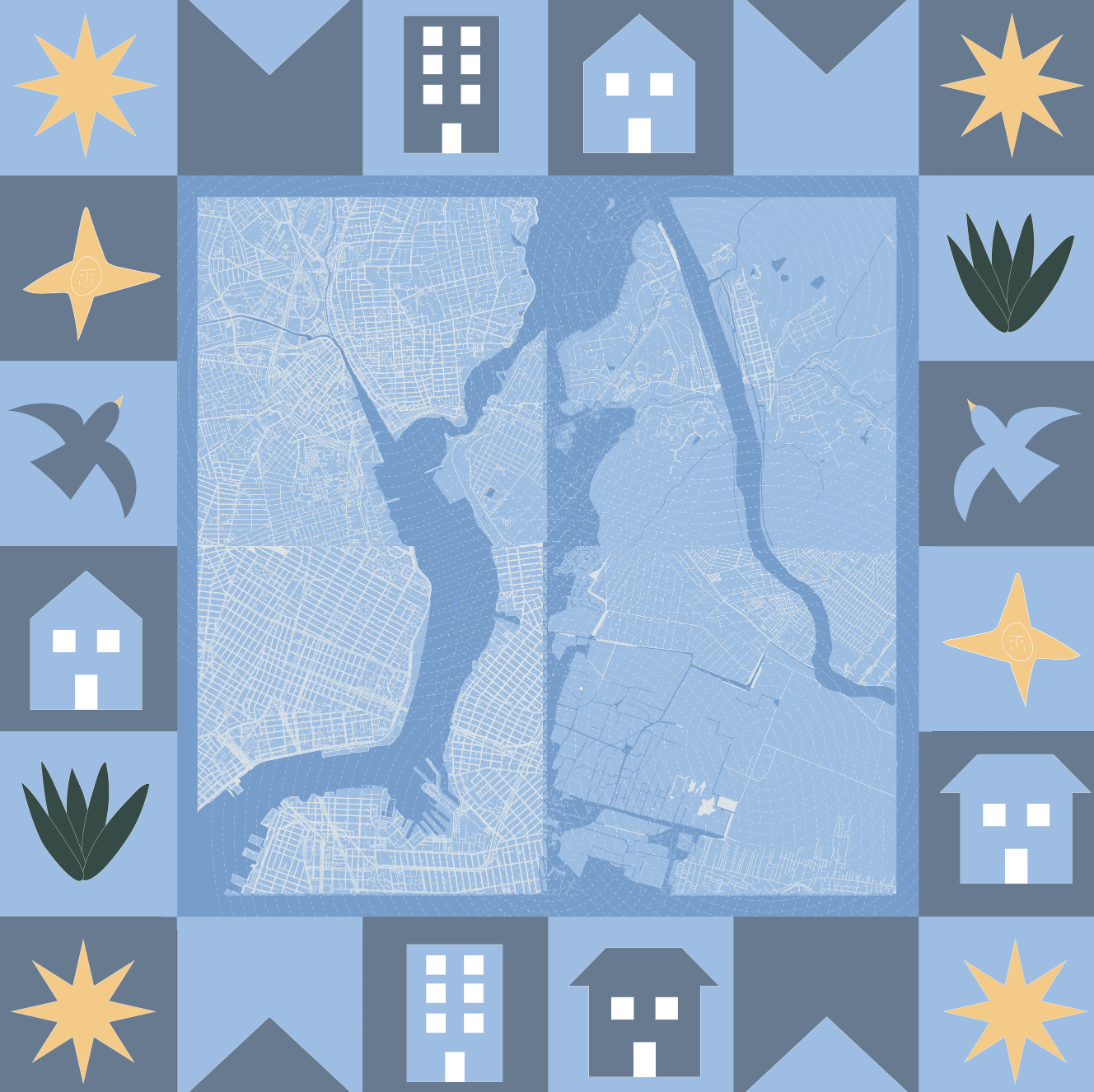
Transboundary Futures:
Counter Mapping Across Borders and Boundaries
Sophia Francesco
Home can be a fixed location, a single structure, the place we grew up, the presence of a person, or a way of being in relation to the world around us.
Transboundary Futures: Counter Mapping Across Borders and Boundaries grows from my personal ongoing exploration of identity, place, and the relationships between landscapes separated by political and geographic boundaries. Centered around waterways, the project examines rivers, streams, and bodies of water as living systems that connect rather than divide. Water moves across borders, carrying ecological processes, cultural histories, memories, and stories that extend beyond the limits imposed by maps and territories.
Through counter mapping, storytelling, and visual research, the project explores how waterways create networks of connection between places that may appear distant or separate. Rather than viewing landscapes as isolated regions, the project explores them as interconnected environments shaped by shared watersheds, histories of movement, and ongoing relationships between human and nonhuman communities.
By focusing on waterways as both physical and symbolic pathways, the project considers how water can offer alternative ways of understanding belonging, challenging fixed ideas of borders and encouraging more fluid relationships with place. These interconnected landscapes reveal possibilities for imagining futures rooted in connection, reciprocity, and shared ecological responsibility.
Indigenous Knowledge Systems → Sophia’s Climate Future
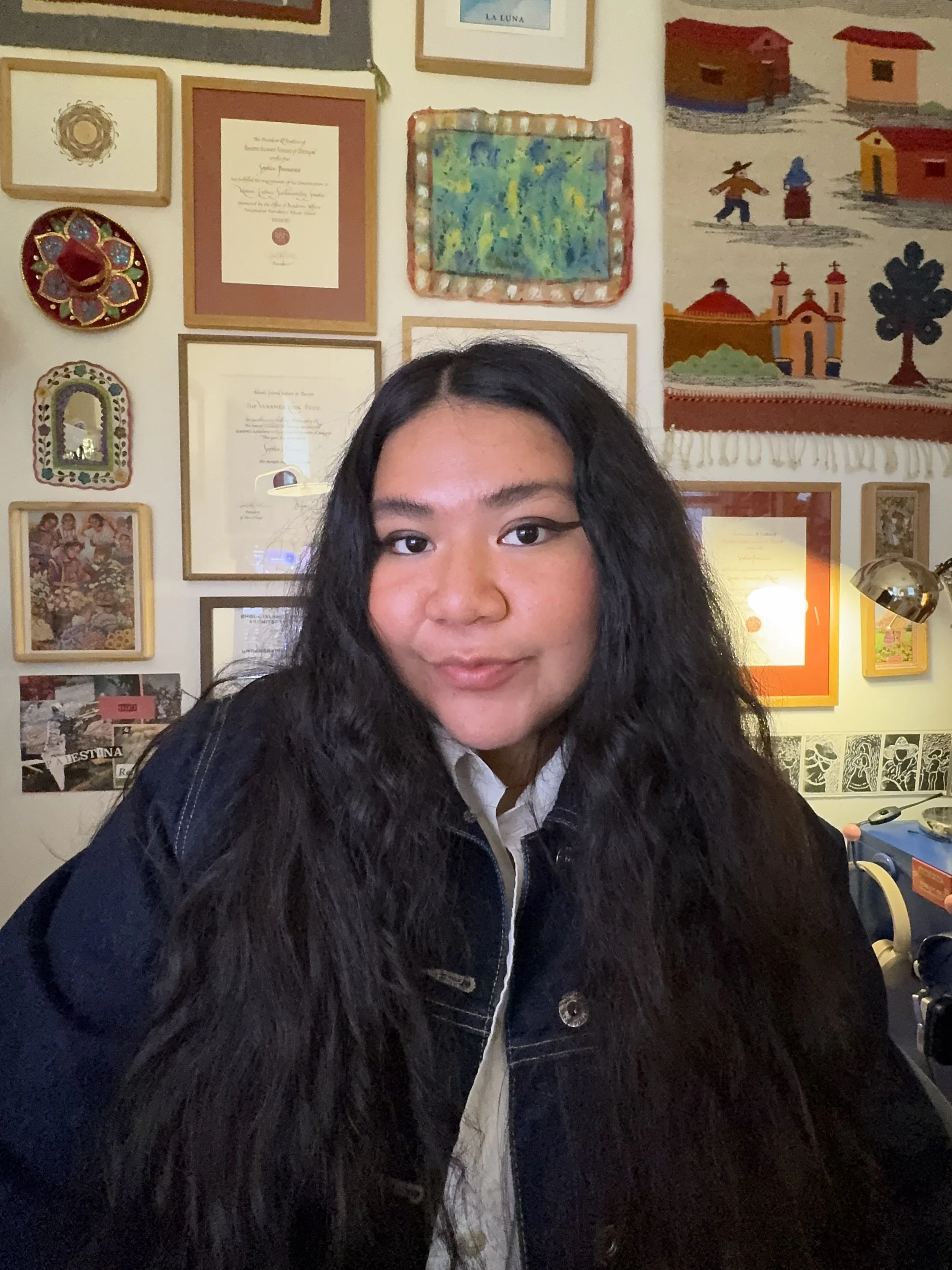
Sophia Francesco
24, New York, NY
Seeking community is a desire embedded in all of us. We long for spaces where we can express ourselves, feel respected, and experience a sense of mutuality and belonging. As a community organizer and designer, I understand architecture as a practice of cultivating relationships between people, place, memory, and the ecological systems that sustain us. I am interested in the social infrastructures that allow communities to adapt, steward, and transform places over time. I ask not only who architecture is built for, but who is invited to shape it. Through ongoing collaboration with regional partners, organizations, storytellers, and community leaders, I position architecture in direct relationship with social engagement. Together, we explore how design can strengthen systems of care and create spaces that reflect the lived experiences, knowledge, and aspirations of the communities they serve. My work is grounded in the belief that architecture can be more than a physical intervention. It can be a space for gathering, exchange, storytelling, and collective imagination.
Such an understanding stems from my lived experiences as a Queer Indigenous Mexican-American (Tacuate-Mixtec) transracial adoptee slowly redefining my relationships with identity, land, and home. My practice began, in part, by imagining a place I hope my future daughter will experience for herself. I imagine a world where grief can exist alongside joy. I imagine communities where people can care for one another and where the next generation can grow up with the spaces, relationships, and sense of belonging I once needed. Each project becomes a form of storytelling. Through an architectural approach, I seek to make the lived experiences, memories, and aspirations of communities visible. Specifically focusing on the possibilities of coexistence with regenerative approaches that foster mutual flourishing between human and non-human ecologies. I believe these spaces can be shaped by memory, participation, and care while dreaming of new possibilities of belonging.
Always with care,
Sophia