to return to love, our earthly paradise, we must find rest
Kikelomo
to return to love, our earthly paradise, we must find rest is a physical archive and videopoem that portrays the landscape of a bedroom that exudes black girlhood and the dreams that come to fruition.
This piece of work invites viewers to see the space as a place of rest and sacredness. There is care that is seeded to make our places free from harm. It poses the question if that is what we are meant to do to our homes, what about our bigger home at large – the Earth.
The table, mirror, and bin takes the audience through a cycle of time. The artifacts on the table explore the care one pours into themselves through safe sustainable practices. The items found in this bedroom showcase identity and how to repurpose in a way that favors cultural maximalism instead of over consumerism. But in order to do this, one must also let go of the things that are no longer serving them in the bin. Facing the mirror, you are reminded that you are here, showing up everyday.
Through the videopoem, the viewer enters the dreamscape of the person’s bedroom and can get a peak of what it means to always be changing and find love on this earth with the earth. The piece asks the question if rest is resistance, what happens after it?
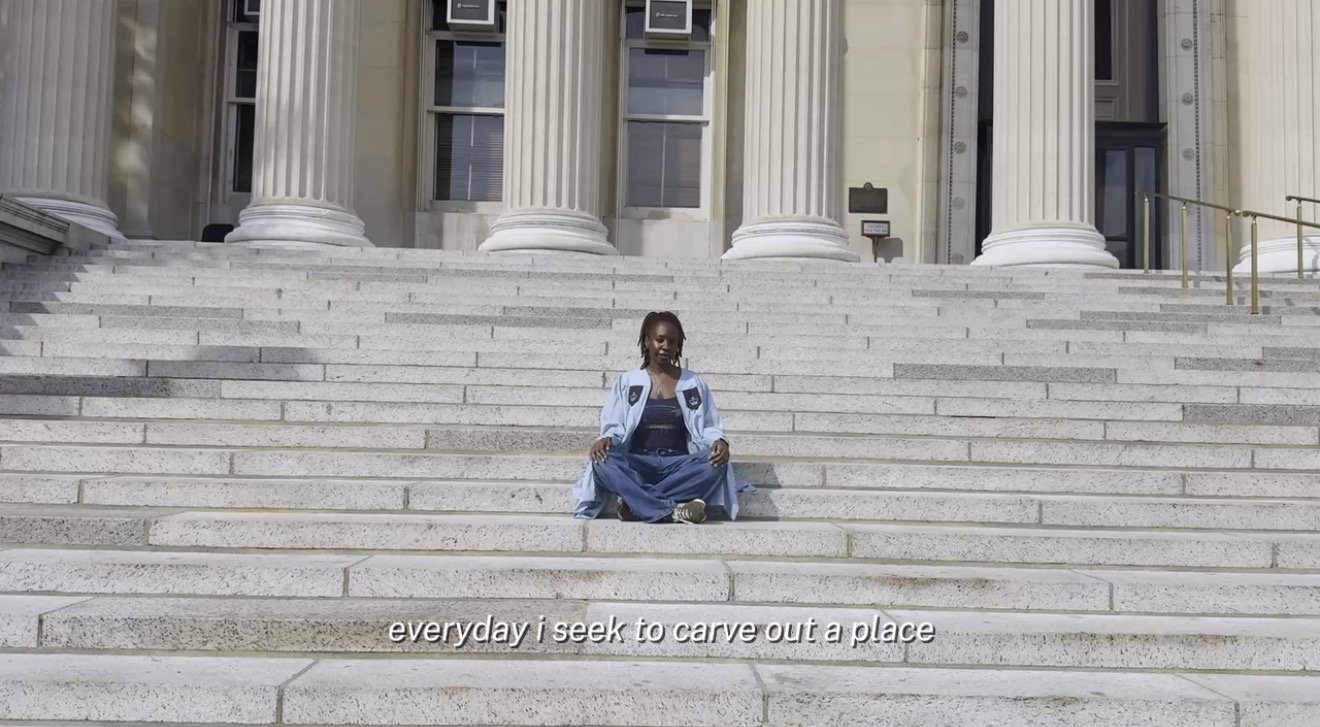

Kikelomo
24, New York, NY
Every dream I get to live was first conceived in a bedroom. There are some that I am living that aren’t just from me but a culmination of all the prayers, wishes, and hope from those before.
Kikelomo is a Nigerian-American writer and filmmaker. She decided to explore the medium of a physical archive after realizing in every space she inhabits she is looking to make a home. Home is a place where she can dream and create, but it’s easier to do when the space feels safe. Having the privilege to travel, she sees this in spaces rooted in culture that is resisting colonization, she sees it in the places you only notice when you take a pause to be still, she sees it in the earth existing as is every single time. She doesn’t only find this in physical entities, she finds this in love. She believes the climate crisis stems from a lack of love, and therefore care of the environment and its people.
As a black woman, she noticed the harm caused on the earth and its exploitation is reminiscent of the exploitation and harm inflicted on her people. Therefore whenever she is asked to think of a better future, she sees solutions from the people who had to dream beyond their reality. In her work, she centers this experience not from trauma but from what happens when we get to exist.
Most of the pieces of the archive were things Kikelomo found in her own bedroom and imagined how they could continue existing and serving. Most of the clips in the film were not intentional but shot when Kikelomo was in a place and saw a beauty in it. Poetry strings the work together because writing has always been her first love.
This piece is meant to honor the everchanging through time but also recognize that girlhood never truly leaves you.